 Zhu's Plant Journal
Compiled reference
Background
This is an epiphytic orchid in the genus Liparis (羊耳蒜屬), Liparis grossa, published by Reichenbach in 1883. Its official Chinese name in the Taiwan Catalogue of Life is 紅鈴蟲蘭, with alternative names including 紅鈴蟲草 and 恆春羊耳蒜 ("Hengchun Liparis"), the name used for this page; the Plants of Taiwan database also lists the common name 立石氏羊耳蘭.
Names
Its synonyms include Liparis tateishii and Liparis rizalensis, among others. Liparis tateishii was published in 1931 by Yushun Kudo based on specimens from Taiwan; the Plants of Taiwan database lists a 1988 publication as the first record of it in Taiwan under the name Liparis grossa.
Appearance
According to the second edition of the Flora of Taiwan, it is an epiphytic herb with nearly globose pseudobulbs about 3 cm long and 2 cm wide. It has 1–3 leaves, usually 2, which are thick and leathery and 6–12 cm long.
The inflorescence, including its stalk, is 10–15 cm long and carries 10–20 flowers. The flowers are greenish, often tinged orange-red; the sepals are strongly reflexed, the petals are linear, and the lip, 7–8 mm long, bends down at a right angle from the middle and is deeply two-lobed at the tip; the column is yellowish green and slightly curved.
Distribution
It is native to Taiwan but not endemic. In Taiwan it is known from broad-leaved forest below 500 m in the eastern coastal region and on Lanyu; outside Taiwan it occurs in the Philippines and Myanmar.
Conservation
The Red List of Vascular Plants of Taiwan (2017) assesses it as Nationally Near Threatened (NNT).
The entire orchid family is listed in CITES Appendix II, and this species is included. Appendix II means international trade is regulated, not banned; it governs cross-border trade and is separate from each country's own domestic law.
Sources
- 臺灣物種名錄 TaiCOL: Liparis grossa Rchb.f. 紅鈴蟲蘭
- 臺灣物種名錄 TaiCOL: Liparis 羊耳蒜屬
- 國立臺灣大學 — 台灣植物資訊整合查詢系統: Liparis grossa Rchb. f. 紅鈴蟲蘭
- UNEP-WCMC/CITES 秘書處 — Species+: Liparis grossa Rchb.f. — CITES Listings
My own observations
Cultivation
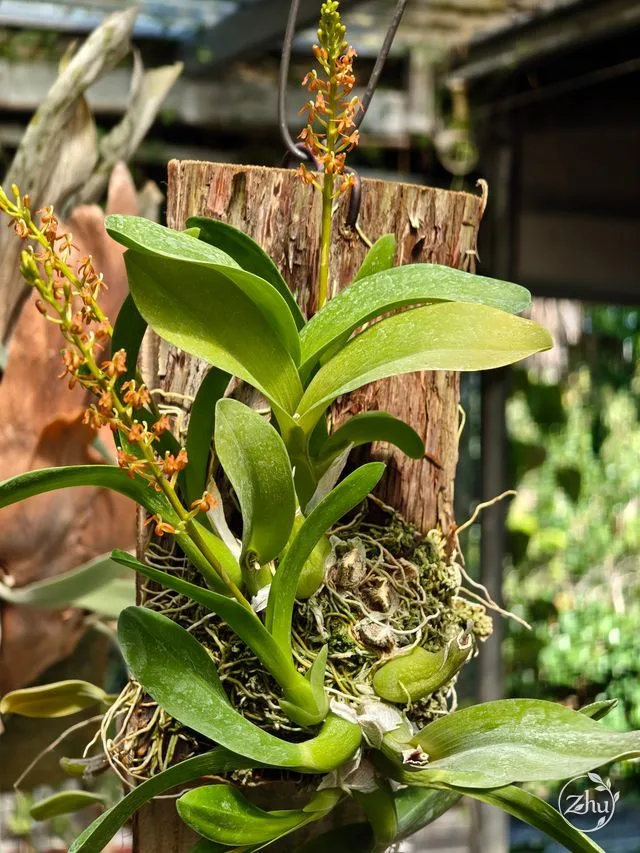
This plant also goes by the name 紅鈴蟲蘭. It's an orchid native to Taiwan, and one I've grown for quite a while, about four or five years, with a dozen or so boards of it by now. It's actually quite easy to grow; I mainly grow them mounted on boards.
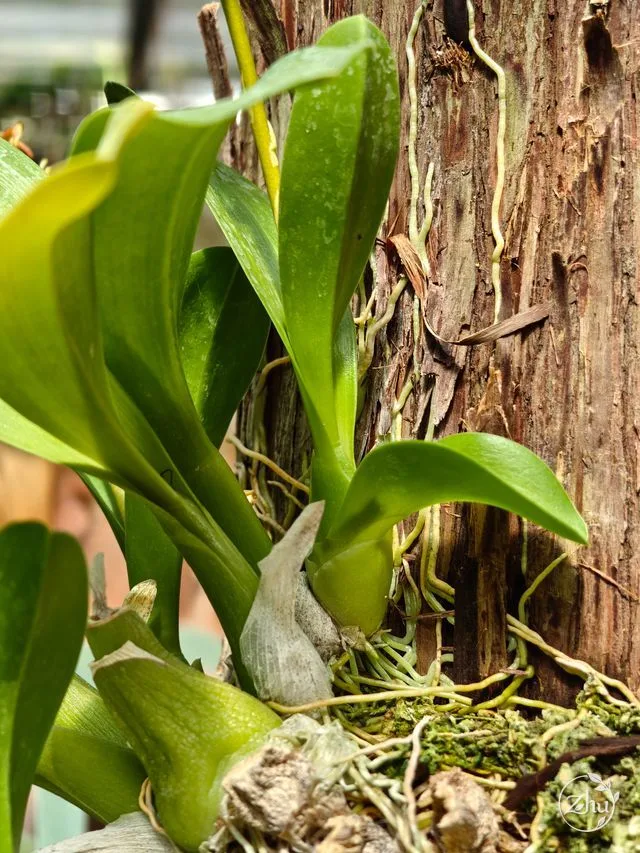
Mounted, day-to-day care is very simple. The one thing to watch is that it doesn't seem to tolerate strong light; even bright diffuse light is a bit too much for it, so I grow mine under roughly 80% shade. Basically, as long as I remember to water, it grows quite vigorously, and the pseudobulbs stay very plump.
Flowering
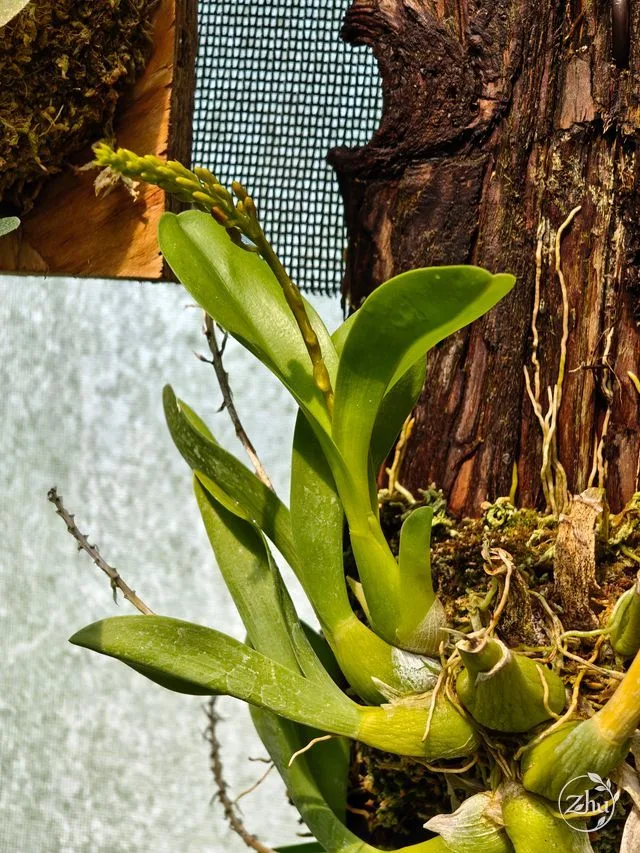
This season happens to be when it flowers. When it blooms, a spike-like inflorescence emerges from the top of the pseudobulb, followed by small orange flowers. They open from the bottom of the inflorescence and continue up to the top.
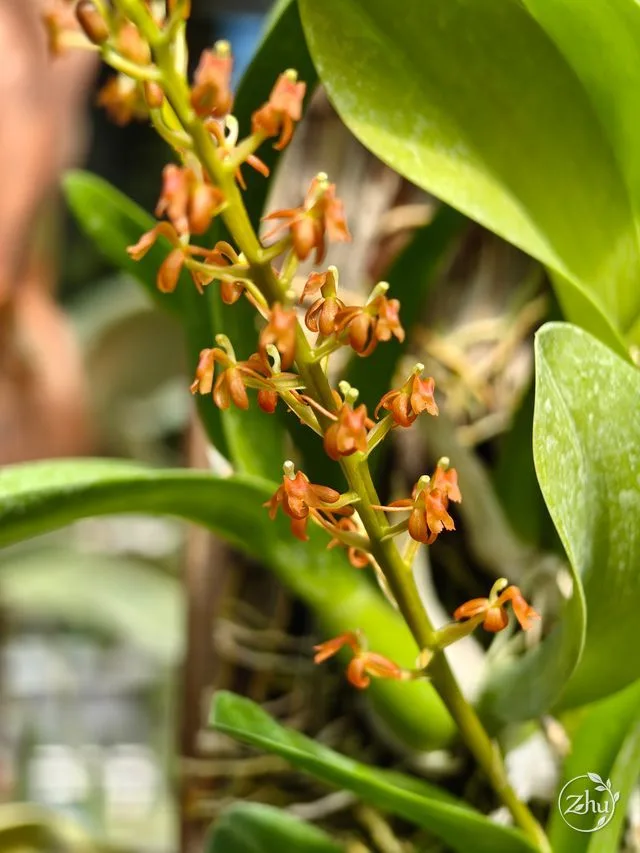
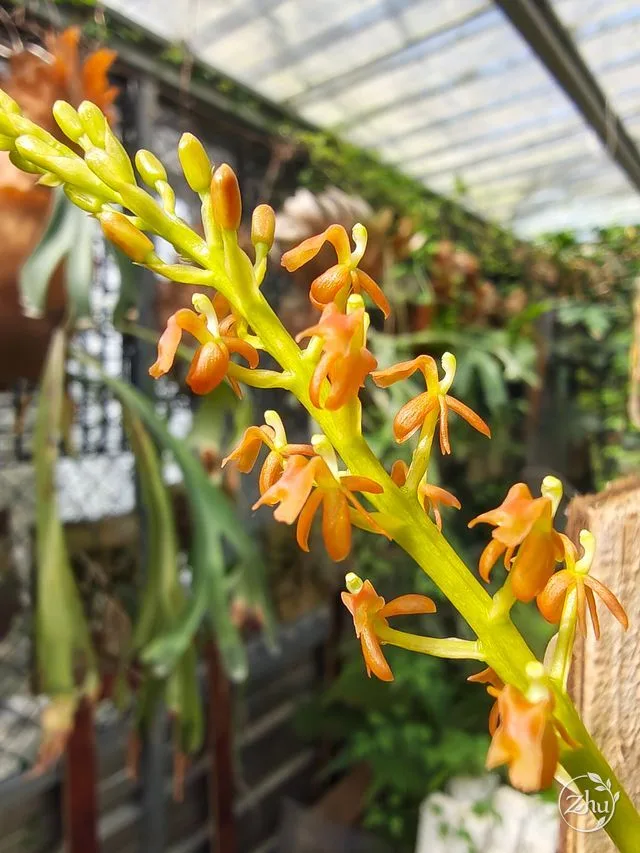
The flowers are a cheerful orange, and with their small size they're really cute. In the photos, the tepals curve backwards, the lip makes up a fairly large share of the flower, and the column is curved like a goose's neck. Up close there isn't much of a scent, so it's mainly grown for its flowers.
I don't actually know why it's called 紅鈴蟲蘭. Beyond that, you'll notice the plant itself is rather cute. It's a sympodial orchid: the parent plant and its offshoots stay joined, so it grows into a clump, and plants in a clump may flower together during the flowering season, which makes for a really lively display.
Each plant has two large leaves on one round, chubby pseudobulb. Besides its attractive flowers, I think quite a lot of people would also like the everyday look of the plant, so round and plump.