 Zhu's Plant Journal
Compiled reference
Background
This plant belongs to the genus Euphorbia in the family Euphorbiaceae. Its scientific name is Euphorbia guillauminiana.
It is a semi-succulent subshrub or shrub, native only to Madagascar, in the Analalava area, where it grows primarily in the desert or dry shrubland biome.
The IUCN Red List assesses it as Endangered, with rocky areas such as inland cliffs and mountain peaks as its habitat. That assessment dates from 2004, however, and IUCN itself flags it as needing updating; no population trend is recorded.
Succulent species of Euphorbia are listed in CITES Appendix II (except Euphorbia misera and the species in Appendix I), and this one is included. Appendix II means international trade is regulated, not banned; under the current annotation to the listing, seeds are not covered by the Convention.
The inflorescence of Euphorbia is called a cyathium and looks like a single flower. Its structure is described in the note The crown of thorns my mum brought home.
Sources
- Royal Botanic Gardens, Kew — Plants of the World Online (POWO): Euphorbia guillauminiana Boiteau
- Flora of China Editorial Committee — Flora of China, Vol. 11(eFloras): Euphorbia Linnaeus 大戟屬
- IUCN — The IUCN Red List of Threatened Species: Haevermans, T. 2004. Euphorbia guillauminiana. e.T44357A10895639
- UNEP-WCMC/CITES 秘書處 — Species+: Euphorbia guillauminiana Boit. — Legal
My own observations
Cultivation
How I started
This is a plant in the spurge family that I have been growing for a while now. What first drew me in was its weathered look, and at the time I happened to see some online sellers offering seed, so I bought some and sowed it.
The germination rate at the time was quite high. Sown as temperatures start to rise, 80 to 90 percent of the seed germinates, and the plants grew well. By about the third year after sowing I was able to get seed from them, and I have since raised a second generation from my own seedlings.
Its appearance
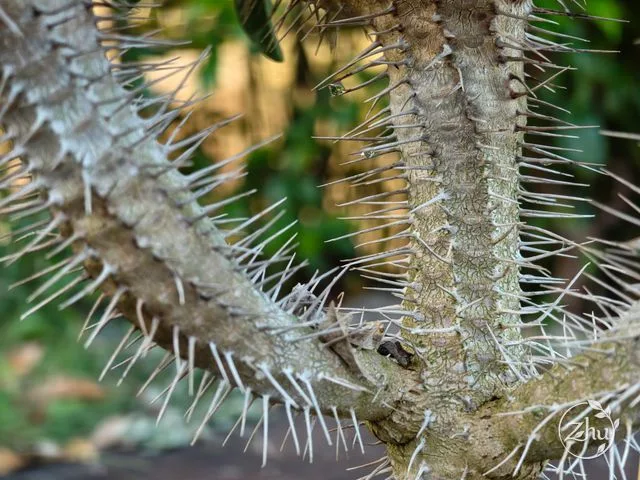
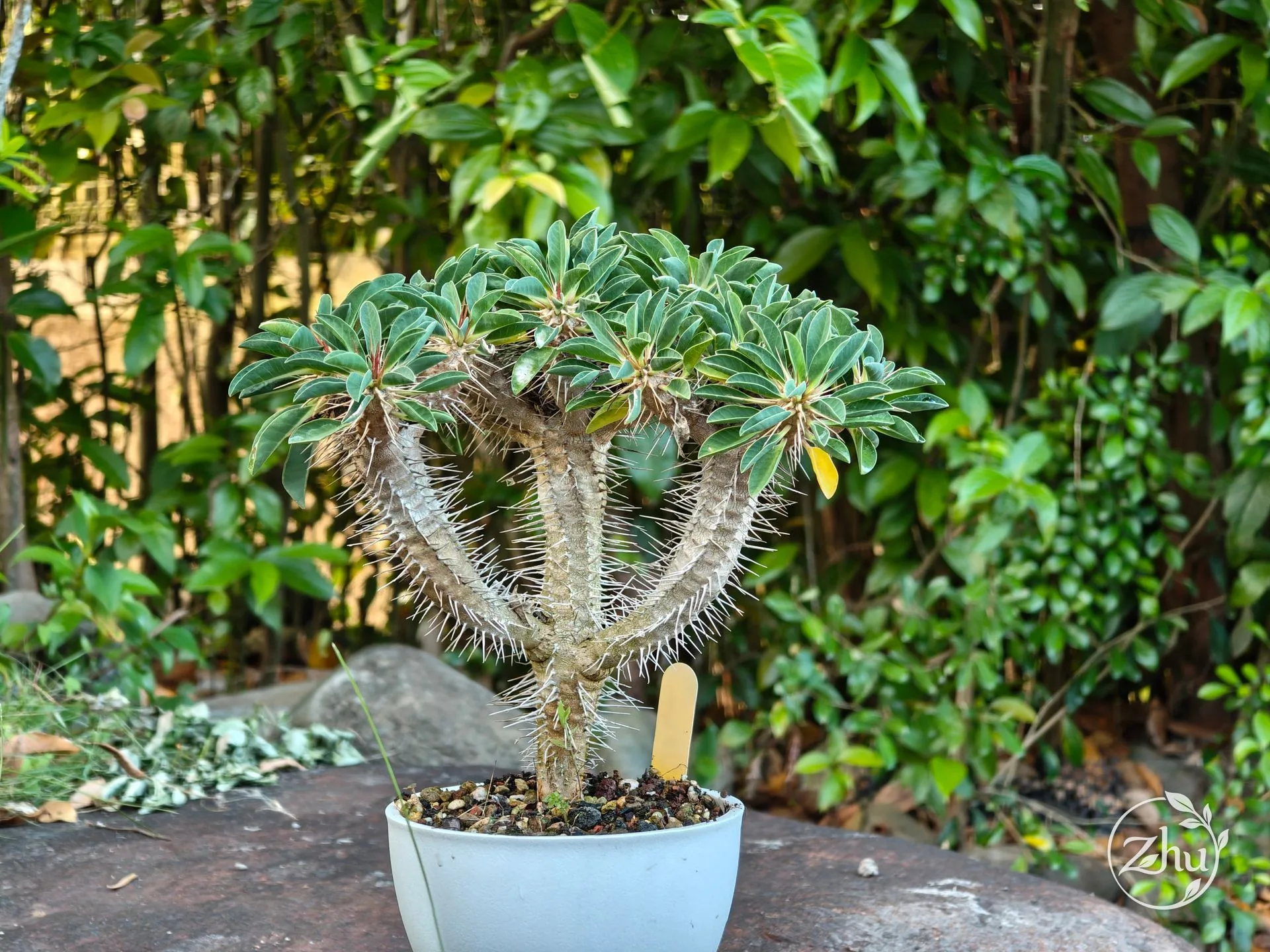
From the photos you can see how showy it looks, and how it gives off a keep-your-distance air. The surface of the stem is covered in spines, which makes you feel this is not a plant to mess with. On some imported plants, though, what you more often see is stems whose spines have already fallen off, the result of weathering in the wild.
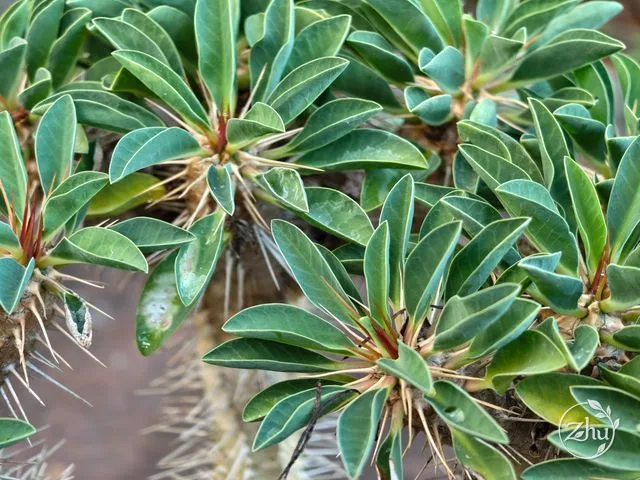
The leaves are clustered at the top, and the growing point carries a few red spines, which mark the newly growing part. When the light is very strong, the leaves also look somewhat folded, as if to fend off light that is too intense.
The flowers
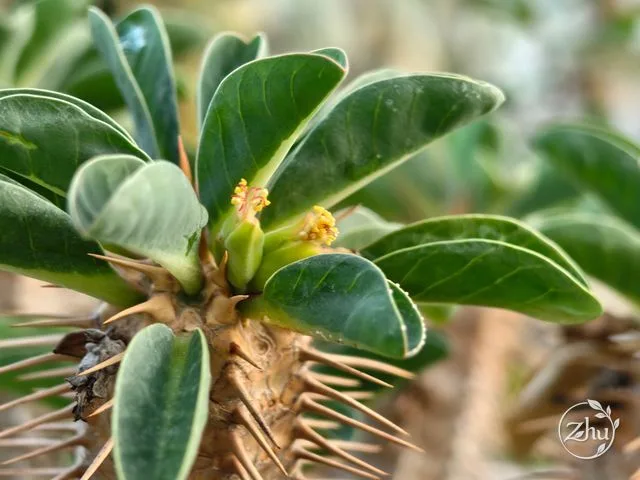
The flowers are not all that eye-catching. They open at the top of the plant in early summer, with green bracts and, at the tip, the stamens and pistil. Hand pollination during the flowering season succeeds fairly easily, and a successfully pollinated flower yields about two or three seeds.
How seedlings differ from one another
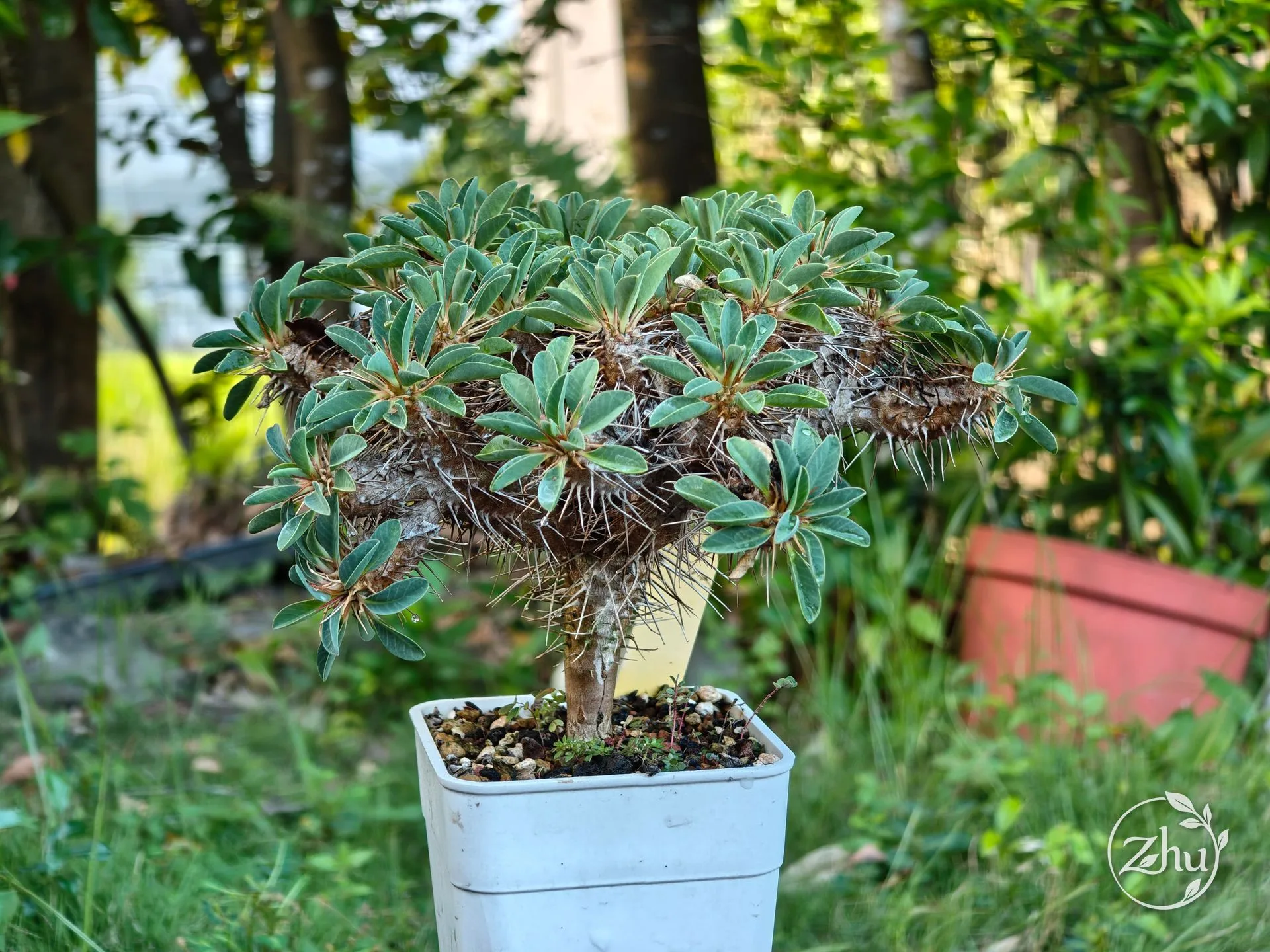
Raising plants from seed is a good way to observe how individuals differ. In my own experience, different plants vary in how much they branch, and even in leaf size and overall size.
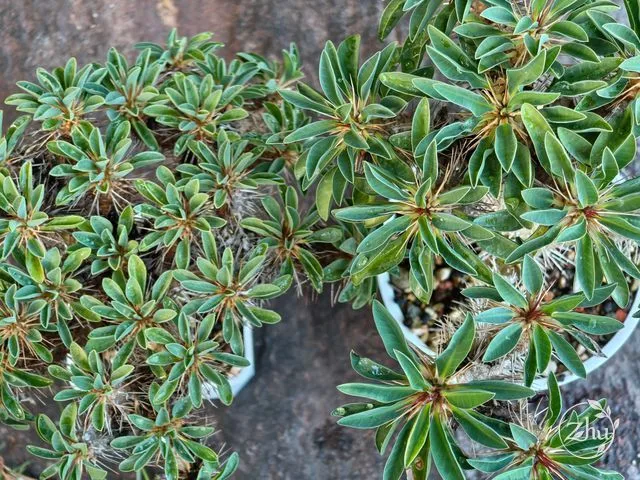
In the photo you can see two plants whose leaf shape, leaf size and branching differ very clearly.
Growing it
I find it quite easy to grow so far. In my experience, under strong light the plant takes on more of that weathered look, while under strong diffused light the leaves look greener and don't fold slightly the way they otherwise do.
I use coarse, gritty potting media as usual, let the media dry before watering thoroughly again, and keep the air moving. So far I have lost almost nothing.
Also, when temperatures drop in winter and cold winds blow, the leaves start to yellow and eventually the whole plant drops them and goes into its dormant season. Only when temperatures rise again does it push out new shoots, and that comes with the stems branching as well.
Photographs