 Zhu's Plant Journal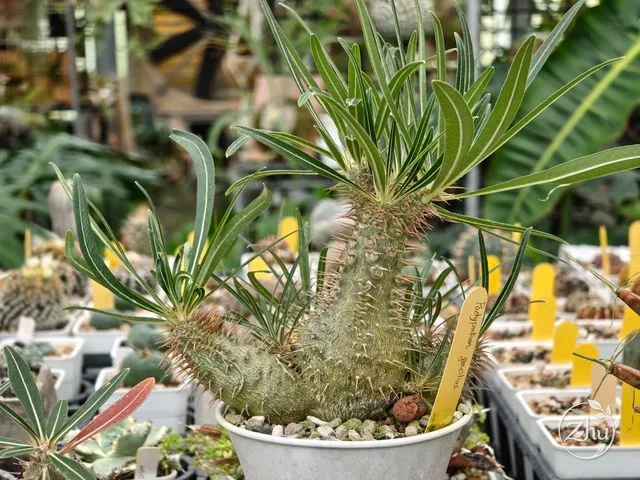
Pachypodium rosulatum subsp. gracilius
Pachypodium rosulatum subsp. gracilius (H.Perrier) Lüthy
Pachypodium Caudex plants
Compiled reference
Background
This plant belongs to the genus Pachypodium in the family Apocynaceae. Its accepted name is Pachypodium rosulatum subsp. gracilius. The name often seen in horticulture, Pachypodium rosulatum var. gracilius, is listed by POWO as a synonym of the same plant.
It is a caudex subshrub, native only to south-central Madagascar, where it grows primarily in the seasonally dry tropical biome.
The IUCN Red List assessed the species Pachypodium rosulatum as Least Concern in 2023 (published in 2025), with a decreasing population trend. In the wild it grows in forest and on rocky ground such as inland cliffs and mountain peaks. Note that the assessment covers the species as a whole, not this subspecies on its own.
The whole genus Pachypodium is listed in CITES Appendix II (except the species in Appendix I), and this plant is included. Appendix II means international trade is regulated, not banned; under the current annotation to the listing, seeds are not covered by the Convention.
Sources
- Royal Botanic Gardens, Kew — Plants of the World Online (POWO): Pachypodium rosulatum subsp. gracilius (H.Perrier) Lüthy
- 臺灣物種名錄 TaiCOL: Pachypodium 棒槌樹屬
- IUCN — The IUCN Red List of Threatened Species: Rapanarivo, S.H.J.V. & Bevan, H. 2025. Pachypodium rosulatum. e.T69222214A69257284
- UNEP-WCMC/CITES 秘書處 — Species+: Pachypodium rosulatum Baker — Legal
My own observations
Cultivation
Why I sowed my own
This time I want to introduce a caudex plant I raised from seedling to grown plant myself. It was a very popular caudex plant a few years ago. Because of the environment they grow in, plants from habitat are often short and squat, with a weathered look, which is exactly why people love them.
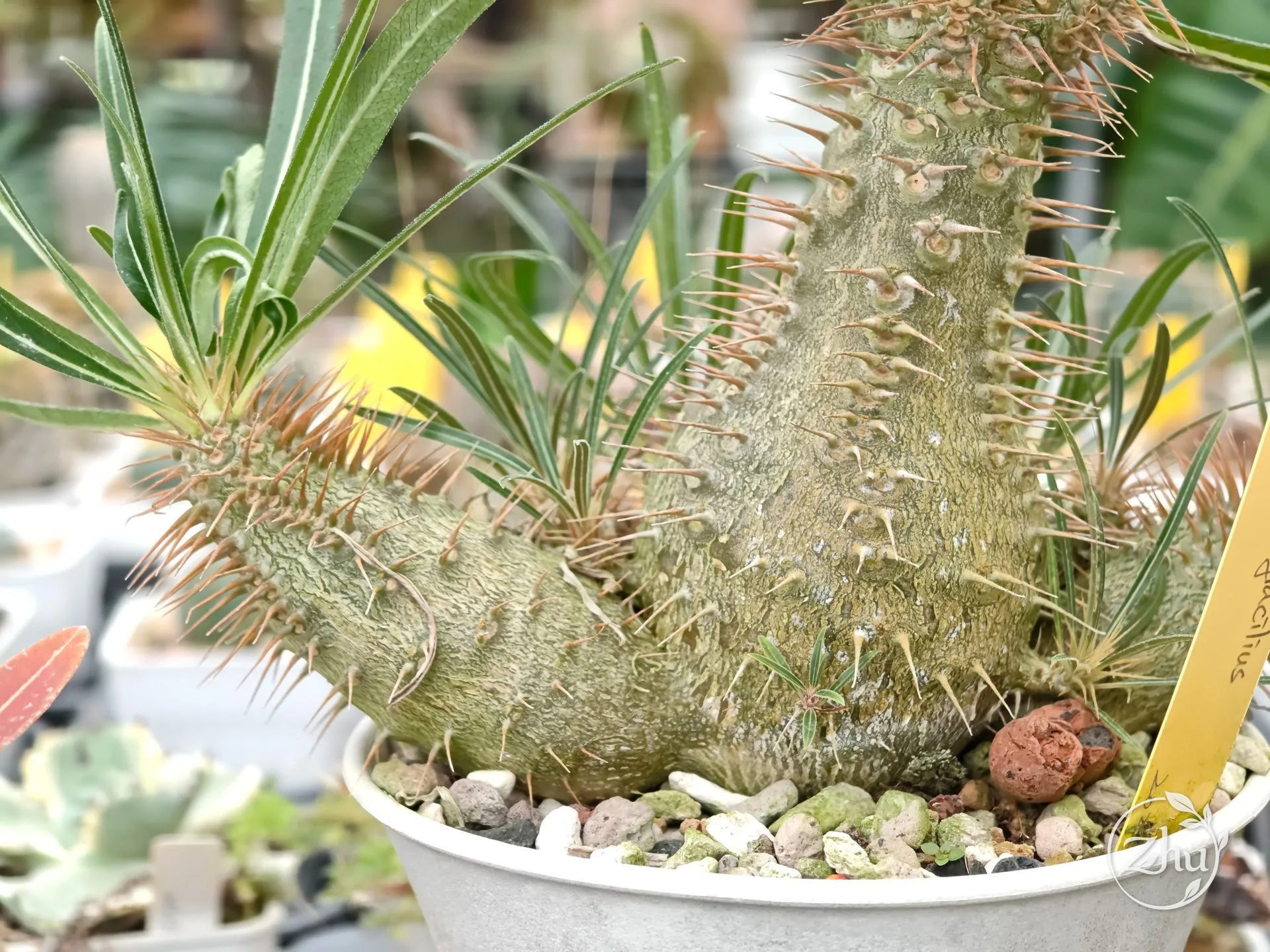
Apart from my pockets not being deep enough, I also wanted to see whether I could get my own plants from seed. About four or five years ago I bought some seed and sowed it myself, and the plant in the photo at the top of this page is one of those seedlings.
Seed quality varies a lot
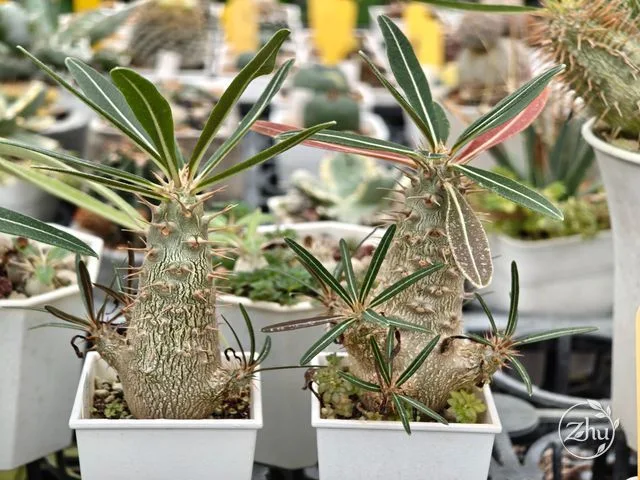
The seed itself isn't expensive, but the quality varies a lot, and success rates differ quite a bit between sources online. Back then, some sellers claimed their seed came from habitat, and even after disinfecting it, it still went mouldy very easily. Later on, seed that some sellers produced themselves went mouldy far less often.
I never ran a proper trial, so whether it came down to the source or to my sowing conditions at the time, there is no way to tell now. This is only a rough account of the impression I still remember.
What a seedling-grown plant looks like
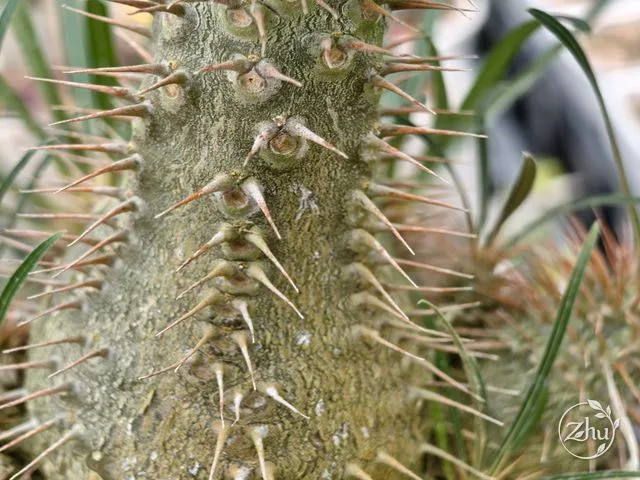
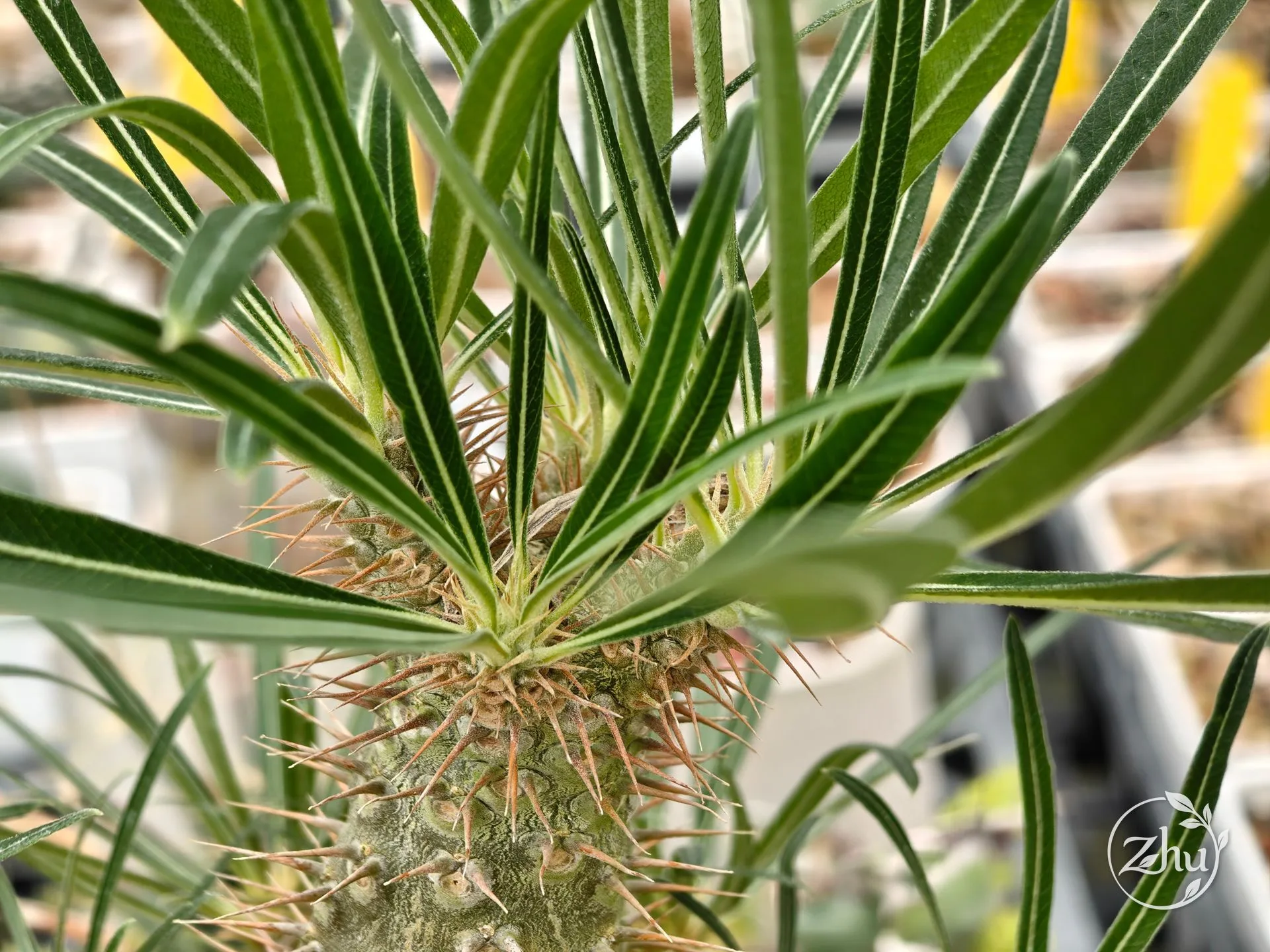
Growing a plant from seed into that weathered, smooth-skinned form you see in habitat is not easy. You can see that my plant, after years of growing, still keeps obvious spines on its stem (and you can see the spines come in pairs).
It doesn't have the look of a habitat plant, but it still has a certain charm, and I am quite fond of it.
Flowering
In the last two years it has also started to flower. Several bright yellow flowers are borne on a long flower stalk, and they are rather sweet.
To get seed, though, from the reading I did online, it appears the male and female parts mature at different times, and it may also be self-incompatible, so hand pollination is probably needed for it to work.
Growing it
I give mine strong light to strong diffused light, and in summer I keep the air moving. As for water, even though I already use coarse, gritty potting media, I still don't give it much.
In Taiwan, where humidity runs on the high side, people in growing groups sometimes report the sudden disaster of the crown rotting out on this family of plants. So sometimes I even wait until the body of the plant has sunk in a little before watering. The next day you see it plump up again, which is quite fun.
Photographs