 Zhu's Plant Journal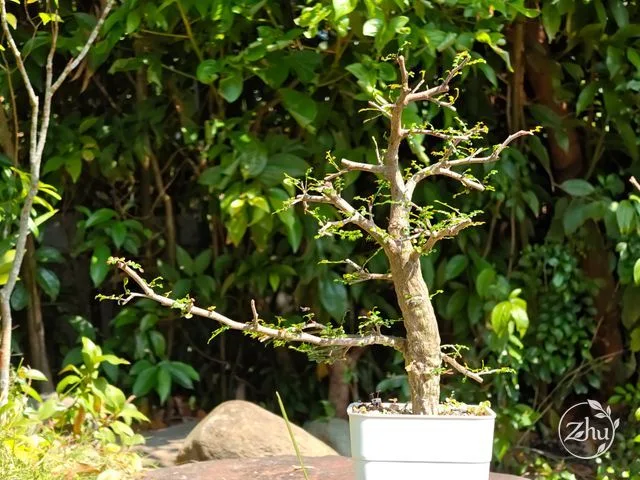
Compiled reference
Background
This plant belongs to the genus Operculicarya in the family Anacardiaceae. Its scientific name is Operculicarya decaryi, published in 1944.
It is a tree native only to Madagascar, where it grows primarily in the seasonally dry tropical biome. Wild populations occur in forest and shrubland from about sea level to 999 metres.
The IUCN Red List assessed it as Least Concern in 2015, with a decreasing population trend.
It is listed in CITES Appendix II, effective since 2013. Appendix II means international trade is regulated, not banned.
Sources
- Royal Botanic Gardens, Kew — Plants of the World Online (POWO): Operculicarya decaryi H.Perrier
- 臺灣物種名錄 TaiCOL: Anacardiaceae 漆樹科
- IUCN — The IUCN Red List of Threatened Species: IUCN SSC Madagascar Plant Specialist Group. 2015. Operculicarya decaryi. e.T68002446A68019576
- UNEP-WCMC/CITES 秘書處 — Species+: Operculicarya decaryi Perrier 1944 — Legal
- Royal Botanic Gardens, Kew — Plants of the World Online (POWO): Operculicarya pachypus Eggli
- 中國科學院植物研究所 — iPlant 植物智: 盖果漆属 Operculicarya
My own observations
Cultivation
My plant
I have had this plant for about four or five years, and it is seed-grown. I actually sowed quite a lot of seed at the time, but most of it never germinated, and in the end only one plant has survived to this day.
For the first year or two there was nothing particularly special about it. The only thing I did was keep cutting back new branches after they grew. Then this year it suddenly started to look good. I think the reason is that every autumn and winter the trunk thickens as nutrients move back into it, so over the years the trunk has grown wider, and together with the relatively thin branches the whole plant has gained a lot of character.
How it differs from Operculicarya pachypus
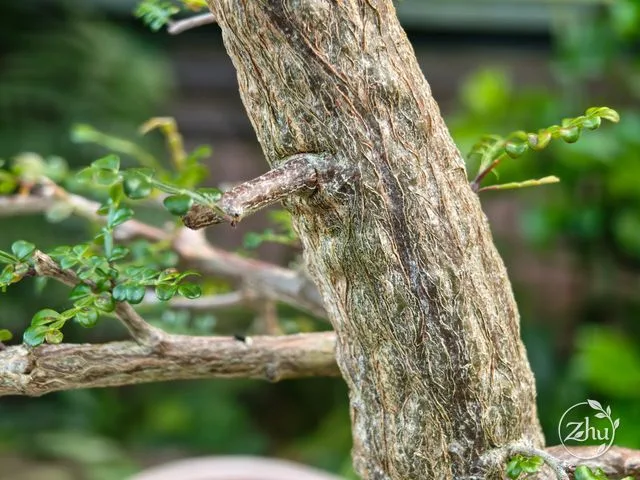
Honestly, I have never been able to tell this one apart well from Operculicarya pachypus (象足漆樹), mainly because I don't have a strong grounding in taxonomy. I have heard that the latter's branches tend to zigzag more, and that the trunk carries more, and more obvious, knobbly growths.
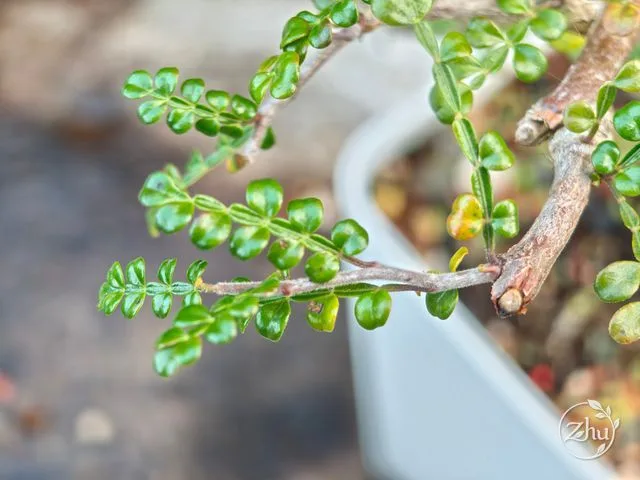
I have never made a really detailed comparison, though. Neither is very common in garden centres or ordinary plant shops, and most of the information comes from exchanges in Facebook groups online. The seed also came from a seller in Taiwan who sourced it abroad, so I can only trust that its origin is correct. The plants in my group have once-pinnate compound leaves, round, glossy and smooth leaflets, and no obvious knobbly growths on the trunk.
Growing it
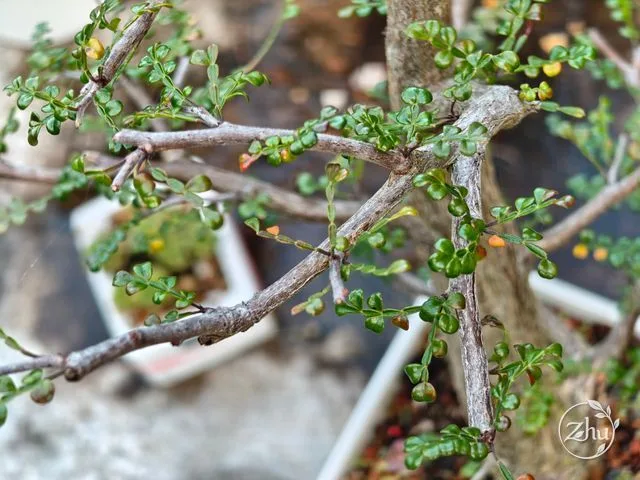
For potting media I add about 20% peat, with the rest being fairly coarse, gritty media. As long as it gets plenty of light, I don't find anything difficult about growing it; it's like an ordinary tree or shrub, and it is fairly drought-tolerant too. Sometimes when repotting you'll see caudex-like storage organs on the roots.
It goes dormant in winter and drops its leaves, then pushes new leaves once spring is over, and summer is its period of very fast growth. I do a little trimming before autumn arrives, and it sprouts again quickly. Towards winter growth slows down, and the leaves start to yellow and fall.
Overall it is very easy to grow and look after, and given its growth form I think it is also well suited to being grown as a bonsai-style tree for display. It's a plant well worth savouring.