 Zhu's Plant Journal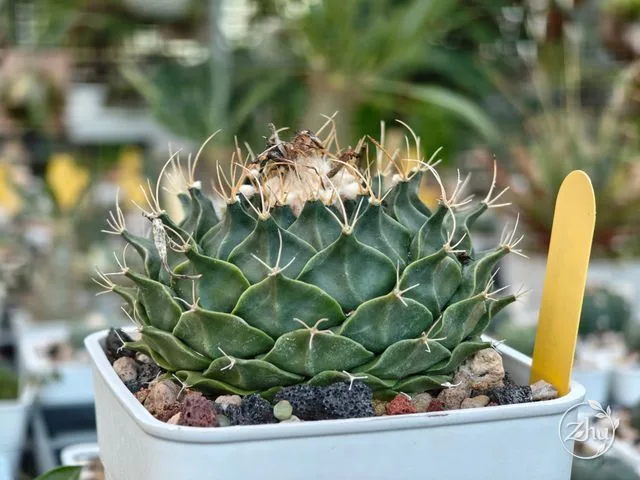
Compiled reference
Background
This cactus belongs to the genus Obregonia in the family Cactaceae. Its scientific name is Obregonia denegrii.
It is native to north-eastern Mexico, growing primarily in the desert or dry shrubland biome.
The IUCN Red List assessed it as Endangered in 2009 (published 2013): it is known from only one location, with about 5,000 mature individuals, and the population is declining. The threats listed include housing development, livestock ranching, roads and the gathering of plants, and national and international horticultural trade is also recorded. IUCN notes that the assessment needs updating.
It is listed in CITES Appendix I, effective since 1981. Appendix I is the most strictly controlled level of CITES.
Sources
- Royal Botanic Gardens, Kew — Plants of the World Online (POWO): Obregonia denegrii Frič
- 中國科學院植物研究所 — iPlant 植物智: 帝冠球属 Obregonia
- IUCN — The IUCN Red List of Threatened Species: Gómez-Hinostrosa, C. & Guadalupe Martínez, J. 2013. Obregonia denegrii. e.T40968A2948122
- UNEP-WCMC/CITES 秘書處 — Species+: Obregonia denegrii — Legal
My own observations
Cultivation
Not like most cacti
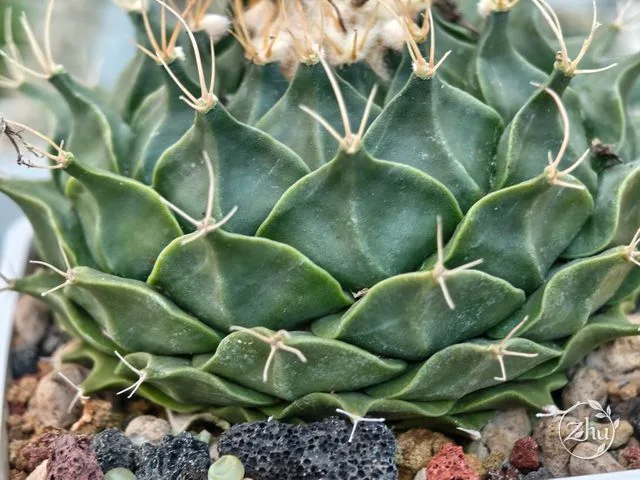
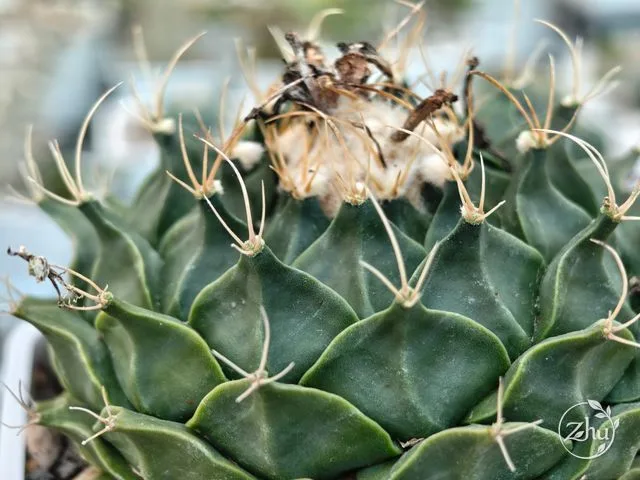
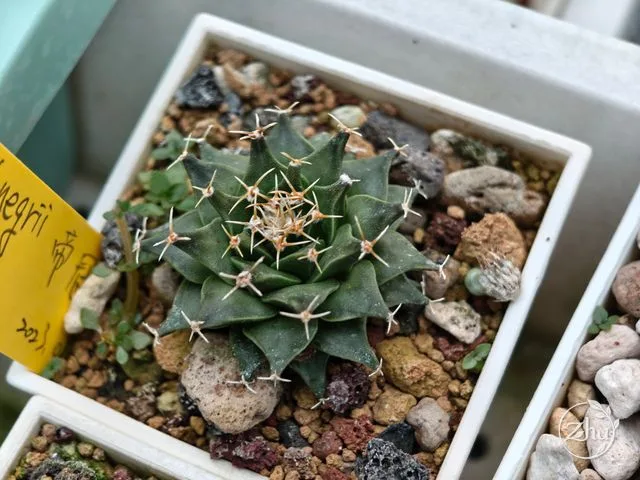
Obregonia denegrii is a cactus I'm very fond of, and it looks quite different from most cacti. The biggest difference is that its stem has distinct triangular tubercles, with the spines growing only from their tips, so the plant looks like a rosette of short, plump leaves.
Flowers and seed
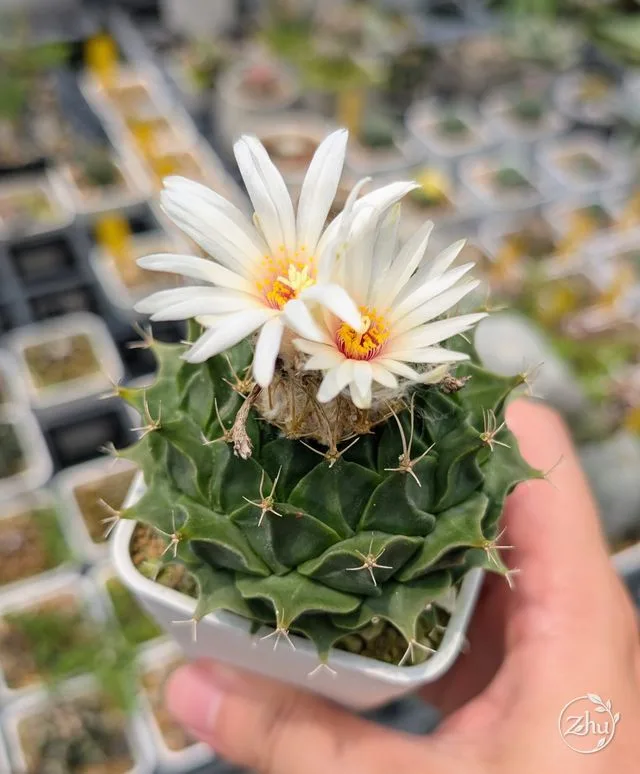
It grows very slowly. I've had my plants for about four to five years, and they are still in 4-inch pots. I originally bought two, and interestingly both have now reached flowering size. However, only one of them can self-pollinate; the other can't (and cross-pollinating the two doesn't work either). Even so, the amount of seed is very small: in several years I've only got two seedlings.
The flowers look very fresh: white petals with a purplish-red centre that fades outward, and bright yellow stamens and pistil. Altogether they look rather elegant.
Growing
It is actually quite easy to look after. I keep mine in fairly strong diffused light and have never put them in strong direct light, so the tubercles look relatively bright green. I use coarse media, and with media that drains this well, watering doesn't need to be very frequent. The basic rule is to let the media dry out before watering thoroughly: a little more often in the warm growing season, and less often in autumn and winter. The plants really don't grow fast; they grow slowly, and you basically won't see a rapid growth spurt.