 Zhu's Plant Journal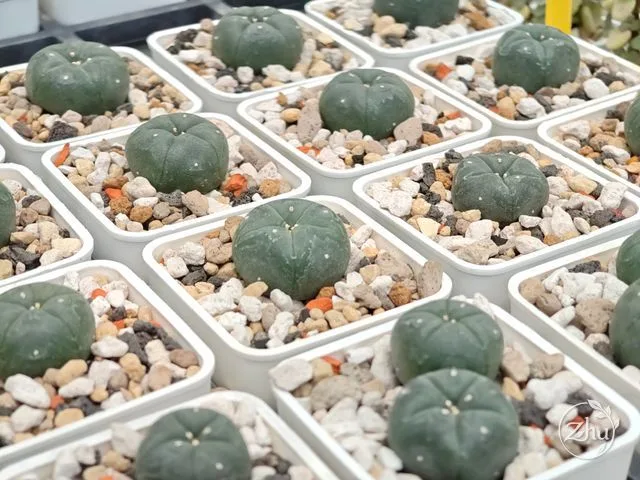
Peyote (Lophophora williamsii)
Lophophora williamsii (Lem. ex J.F.Cels) J.M.Coult.
Lophophora Succulents and cacti
Compiled reference
Background
Peyote belongs to the genus Lophophora in the cactus family, Cactaceae. Its scientific name is Lophophora williamsii.
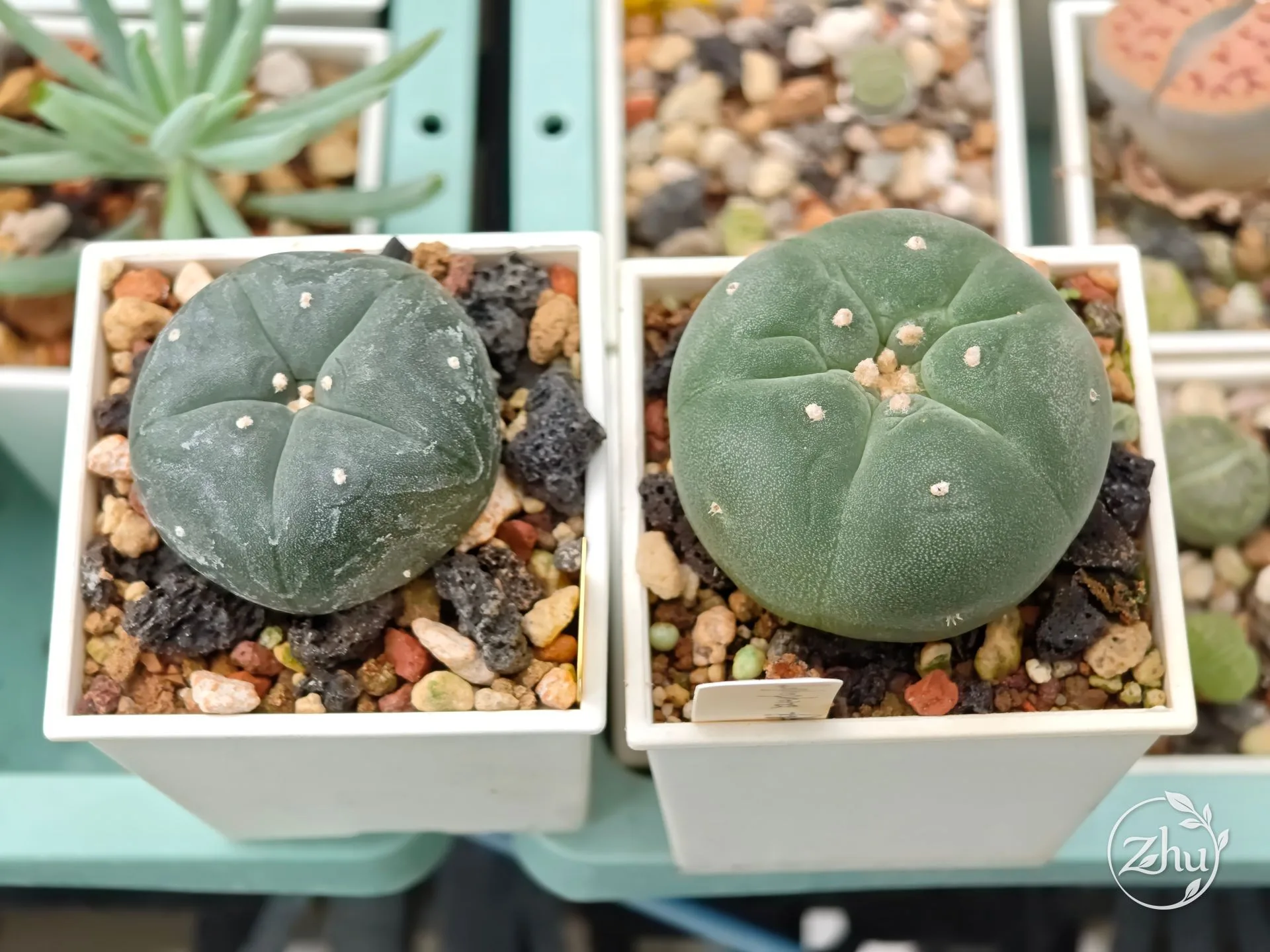
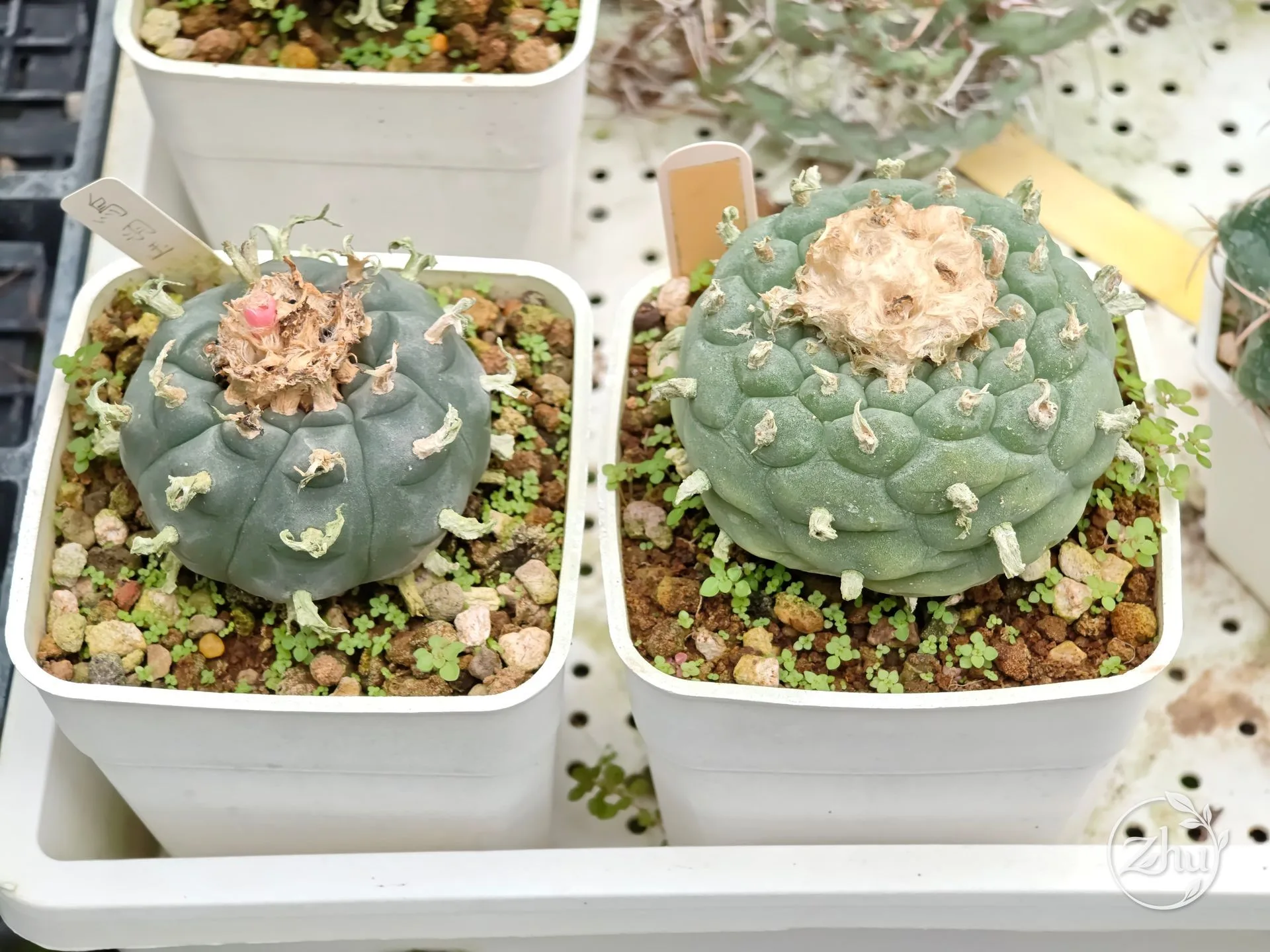
It has no spines. The stem is flat or dome-shaped with a deeply sunken centre, and the plant sits almost flush with the soil. Below the surface is a fleshy root shaped like a broad carrot, 6 to 12 cm long. Some plants branch into many heads, and old plants can form a mound.
It is native from south-western and southern Texas to north-eastern Mexico, as far south as Jalisco. In the wild it grows in Chihuahuan desert scrub and Tamaulipan thorn scrub, usually on or near limestone hills, at about 100 to 1,500 metres.
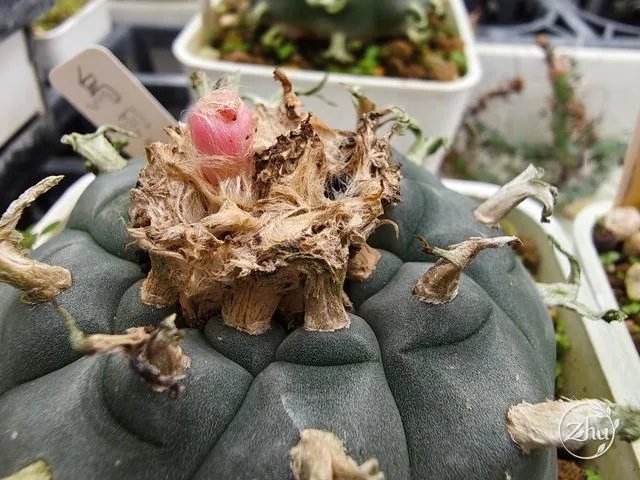
The flowers sit in the dense tufts of hair at the top of the stem and appear from March to May, sometimes as late as September. The fruit can take up to about a year after flowering before it suddenly ripens, and the seeds are black, 1 to 1.5 mm long. Plants can live for many decades and grow very slowly.
The name in current use was published by J. M. Coulter in 1894. POWO lists 35 synonyms for it.
The whole cactus family is listed in CITES Appendix II (with exceptions such as the Appendix I species), and peyote is included. Appendix II means international trade is regulated, not banned. It governs trade across borders and is a separate matter from each country's own domestic law.
Sources
- Royal Botanic Gardens, Kew — Plants of the World Online (POWO): Lophophora williamsii (Lem. ex J.F.Cels) J.M.Coult.
- Flora of North America Editorial Committee — Flora of North America, Vol. 4(eFloras): Lophophora J. M. Coulter
- Flora of North America Editorial Committee — Flora of North America, Vol. 4(eFloras): Lophophora williamsii (Lemaire ex Salm-Dyck) J. M. Coulter
- 農業部生物多樣性研究所 — 台灣生物多樣性網絡(TBN): 烏羽玉屬 Lophophora(TaiCOL 編碼 t0025756)
- UNEP-WCMC/CITES 秘書處 — Species+: Lophophora williamsii — CITES Listings(仙人掌科科級列名全文與註解 #4)
- Royal Botanic Gardens, Kew — Plants of the World Online (POWO): Lophophora fricii Haberm.
My own observations
Cultivation
My plants
Peyote is one of the few cacti I grow in larger numbers. I'm not sure how it happened: about five years ago I bought two plants, plus one Lophophora fricii, and they have kept multiplying ever since. I now have a few dozen.
My peyote self-pollinates very easily and sets seed without any trouble, so every year I collect some of the seed and sow it in spring. If all goes well, by summer there is a crowd of tiny green seedlings about the size of mung beans. After a year under strong diffused light, I move them into slightly larger pots, and in about two to three years they reach the size of the plants in the photo further down, the ones taken out of their pot.
Honestly, none of this is hard. The only real bottleneck is probably patience. Most of the time they are plants that just get left to one side and don't need watering very often, but they keep growing, slowly.
The root below the soil
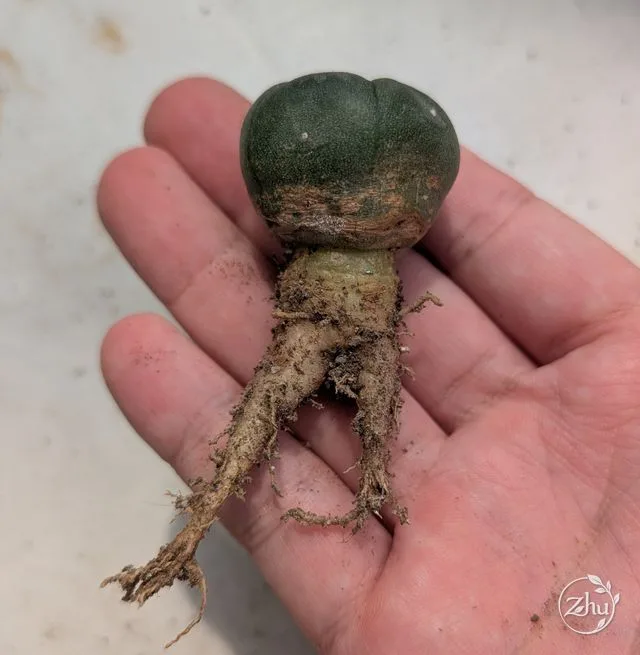
The interesting part is that although the plant you see above the soil is small, when you dig one up, the root underneath is sometimes even bigger than the part above ground. It looks quite funny.
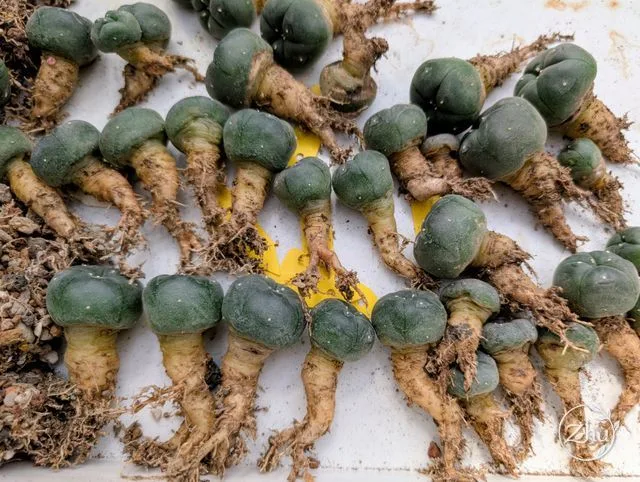
The batch below had become crowded in its pot, so I took them out to replant. In general, though, I repot about every two years.
Growing it
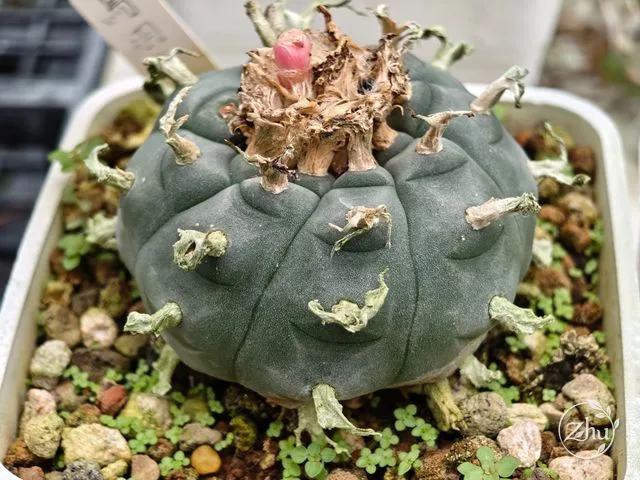
It is actually quite easy to grow. Just remember not to water too often: wait until the soil has dried before watering again, keep it somewhere with strong diffused light to strong light, and give it reasonable airflow. I think it is a relatively easy species to grow.
Photographs