 Zhu's Plant Journal
Elephant's foot (Dioscorea elephantipes)
Dioscorea elephantipes (L'Hér.) Engl.
Dioscorea Caudex plants
Compiled reference
Background
Elephant's foot belongs to the genus Dioscorea in the family Dioscoreaceae. Its scientific name is Dioscorea elephantipes.
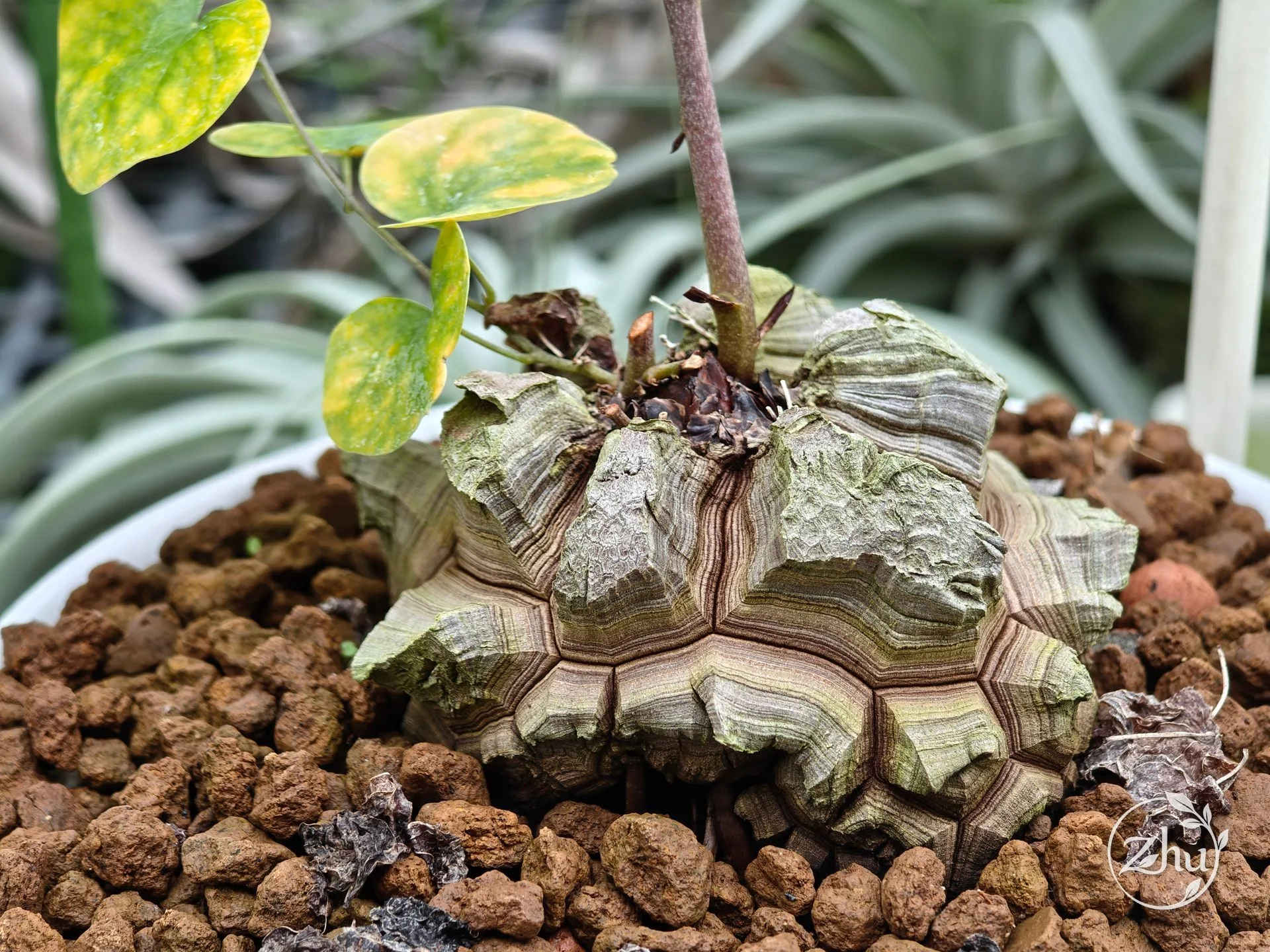
What catches the eye is the swollen part sitting above the soil, its surface split into deep, blocky plates like an elephant's foot, which is where the common name comes from. Botanically, that swollen part is a thickened stem, not a root. Climbing vines grow from the top, and the leaves are heart-shaped.
It is endemic to South Africa. Wild populations occur in the Northern Cape, Western Cape and Eastern Cape provinces, on rocky slopes of quartzite and shale.
In its native habitat it grows through winter and spring, then drops its leaves and goes dormant in the hot, dry summer. While it is leafless and resting, avoid overwatering. It can only be propagated from seed; cuttings do not work.
The species is not listed in the CITES Appendices. In South Africa, however, its wild populations are declining, mainly because of illegal collection for the horticultural and traditional medicine trades. The South African National Biodiversity Institute assessed it as Least Concern in 2022, with a decreasing population trend.
Sources
- Royal Botanic Gardens, Kew — Plants of the World Online (POWO): Dioscorea elephantipes (L'Hér.) Engl.
- South African National Biodiversity Institute (SANBI) — Red List of South African Plants: Dioscorea elephantipes (L'Hér.) Engl. National Assessment(Victor, Dold & Mhlongo 2022, version 2024.1)
- South African National Biodiversity Institute (SANBI) — PlantZAfrica: Dioscorea elephantipes(Ian Oliver, Karoo Desert NBG, April 2005)
- UNEP-WCMC/CITES 秘書處 — Species+: Dioscorea elephantipes — CITES 查詢
My own observations
Cultivation
My plants
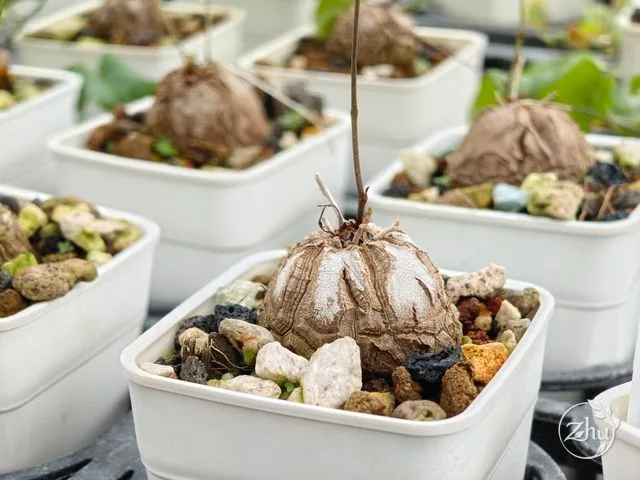
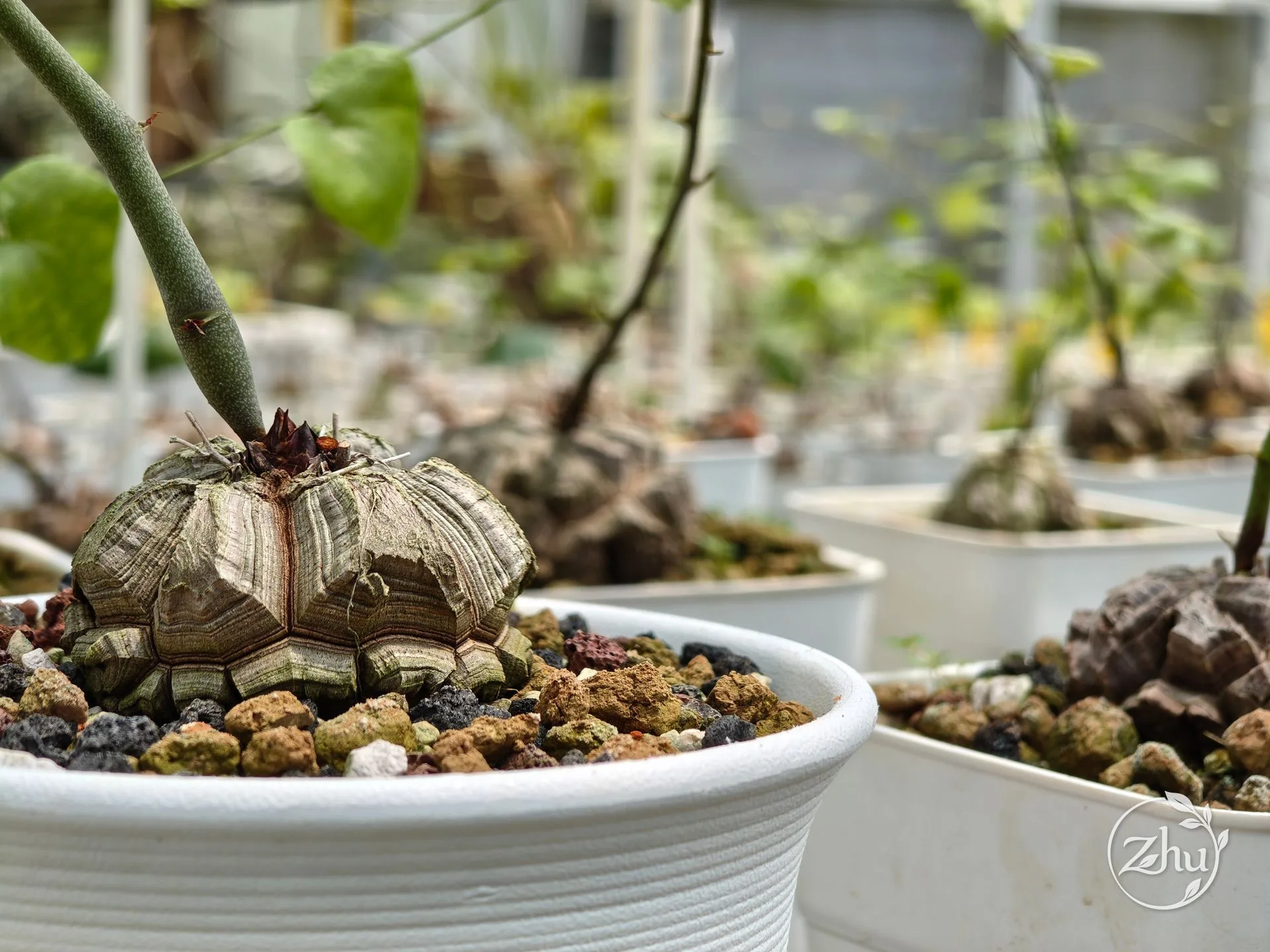
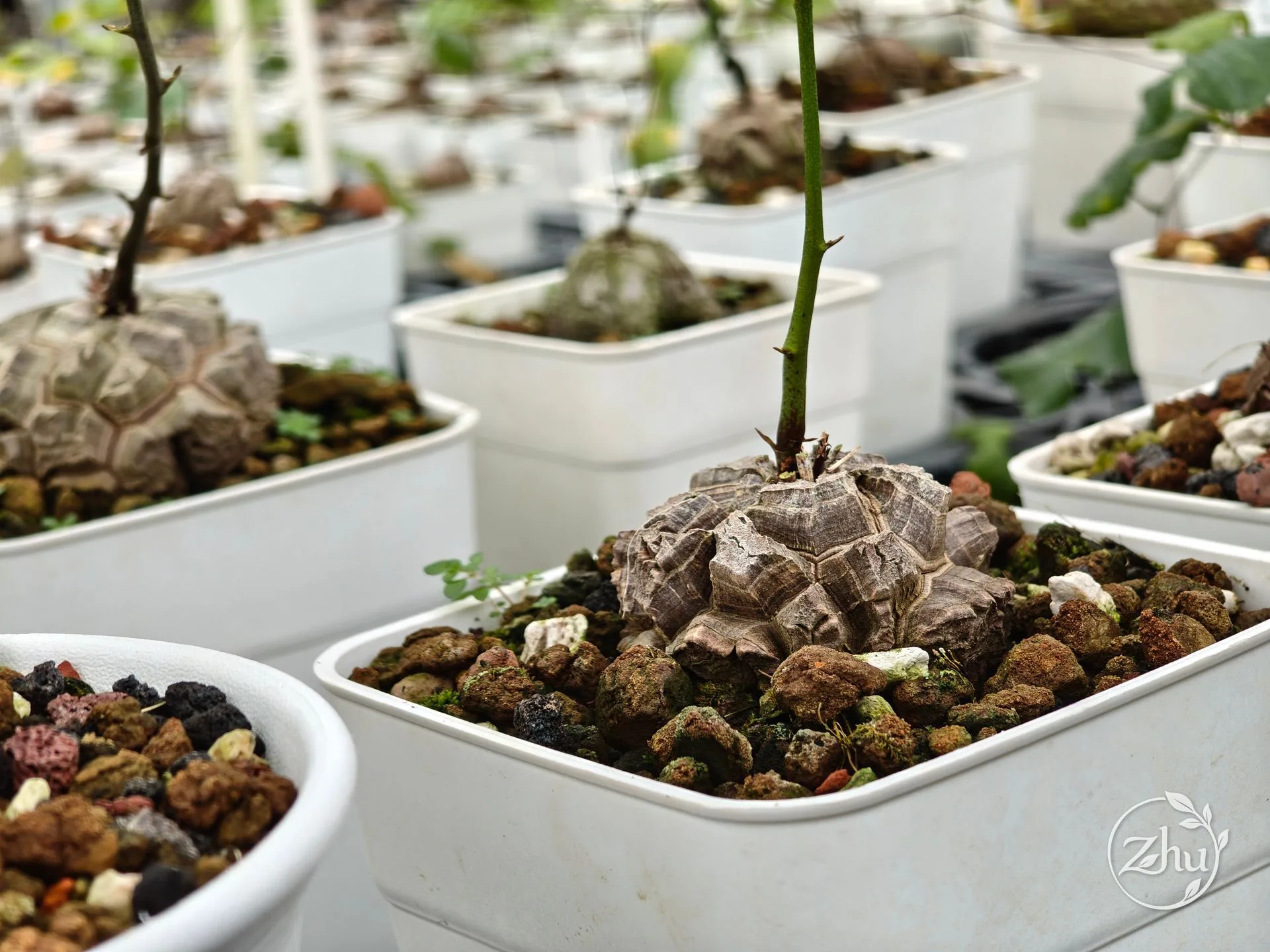
Every plant in the photos on this page is a seedling I raised myself from seed I bought. The ones in larger pots are about three to four years old, and I also have some one- and two-year-old seedlings. I am very fond of this species: the forms it builds up over years of growing make it a real pleasure to keep and admire.
Grown well, a young plant's tuber should have no trouble gaining 3 cm in diameter a year, and I have heard that some very skilled growers get more than 4 cm.
The patterns on the tuber
This is a caudex plant I really love, although the swollen part people admire is more accurately called a tuber.
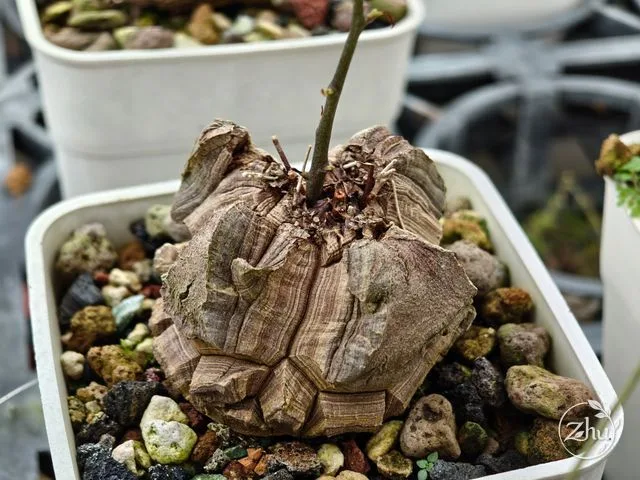
What makes elephant's foot captivating is the pattern. No two plants crack the same way: the pattern and depth of the fissures, and the size of the tuber, are influenced by the light and water it gets in cultivation. The saying "water makes it round, light makes it crack" fits my own experience. People in the growing community say similar things, but views seem to differ a lot from one community to another, so what I describe here is only what I have observed in my own growing conditions.
Light, watering and dormancy
They do not need intense light. Bright, strong diffused light is actually enough for them to grow.
It also does not seem to need the bone-dry treatment that many other caudex plants do, and it can put up with going unwatered for a while. I use a coarse, gritty mix and water about a day after the surface of the soil has dried; if I accidentally leave them too long without water, the tuber sometimes even sinks in and flattens, which spoils its looks.
My larger plants go dormant for about a month in early summer. During dormancy I water less: the soil surface also dries more slowly then, and since I go by how the surface looks, the watering naturally becomes less frequent than usual.
According to more experienced growers, seedlings need more water, mature plants should go through wet-dry cycles, and mature plants show a more pronounced dormancy.
Leaves and vines
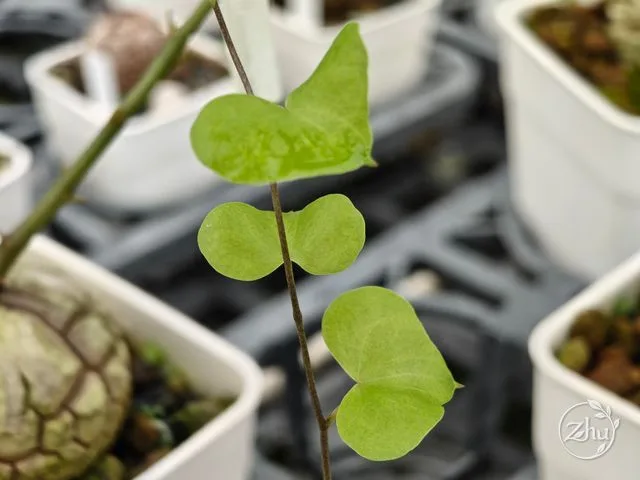
The leaves are a charming heart shape, and the vines climb. Once the vines lengthen, many people give them aluminium wire or a stake to twine around and train them into playful shapes.
Photographs