 Zhu's Plant Journal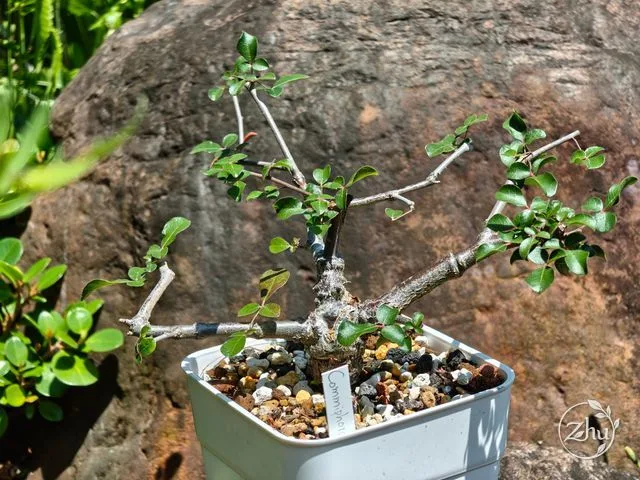
Compiled reference
Background
This plant belongs to the genus Commiphora in the family Burseraceae. Its scientific name is Commiphora orbicularis.
It is a shrub native to western and south-western Madagascar, growing primarily in the desert or dry shrubland biome.
There is currently no IUCN Red List assessment for it.
It is not listed in the CITES Appendices.
Sources
- Royal Botanic Gardens, Kew — Plants of the World Online (POWO): Commiphora orbicularis Engl.
- 中國科學院植物研究所 — iPlant 植物智: 没药树属 Commiphora
- IUCN — The IUCN Red List of Threatened Species: 搜尋「Commiphora orbicularis」
- UNEP-WCMC/CITES 秘書處 — Species+: Commiphora — 查詢
My own observations
Cultivation
One of the first I collected
When I started getting into the Burseraceae two or three years ago, Commiphora orbicularis was one of the first plants I collected. It is actually a very beginner-friendly Commiphora: it is reasonably priced, and there is nothing about growing it that feels particularly troublesome. The plants I have now are about two to three years old; some I bought as young plants and some I grew from seed.
The one thing is that its growing season doesn't seem very long, though I'm not sure whether that's because I grow it in northern Taiwan. Compared with my other Burseraceae, for the past two years it has woken from dormancy about one to two weeks later, so sometimes I worry that it might just not wake up again after the winter.
Name and appearance
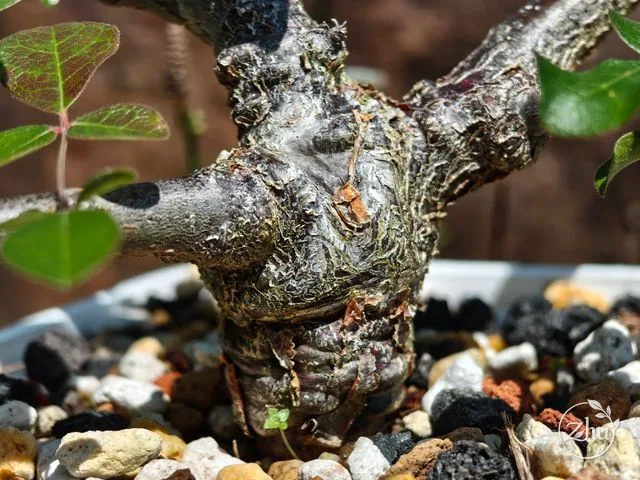
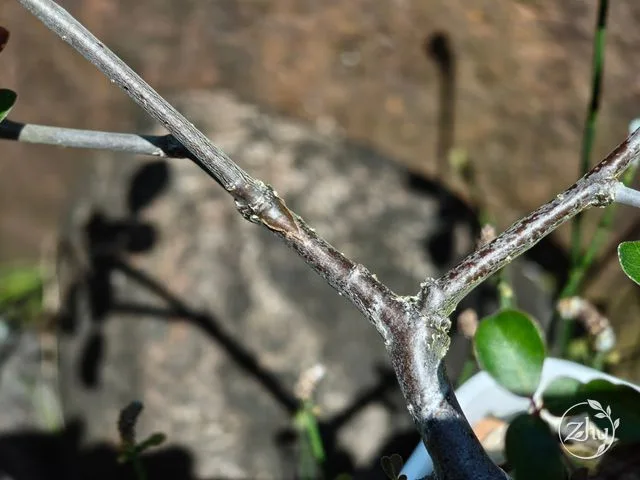
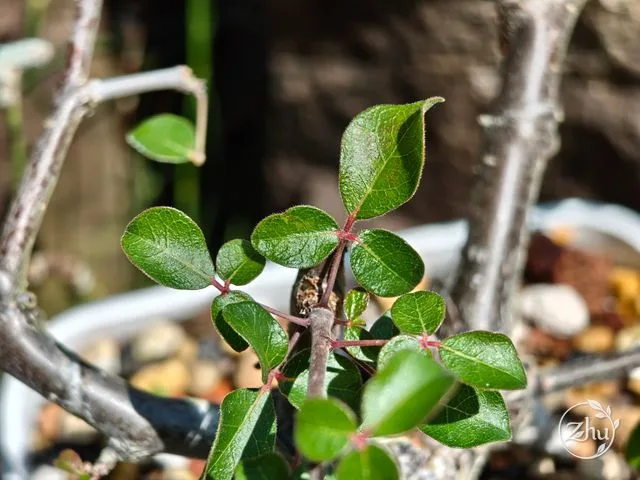
Its Chinese name, 紅皮沒藥 ("red-skinned myrrh"), most likely comes from its bark: as the plant heads into autumn and winter and draws its nutrients back, the stems swell and the bark that peels away looks orange-red. Mature branches grown in plenty of sun, meanwhile, have a glossy, bronze look.
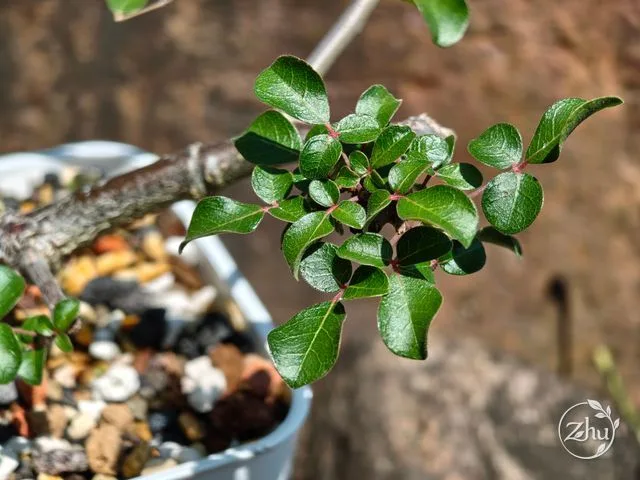
The leaves are trifoliate, and the leaflet stalks are red. Where the stalks of the three leaflets meet, it looks like a little red dot, which is quite memorable. When a branch is snapped or cut, it also bleeds a fragrant milky sap with a pleasant citrus scent.
Growing
I don't find it difficult to grow. As with the others, coarse media and a sunny, well-ventilated spot are all it takes. It also goes dormant in autumn and winter; only when summer is approaching and temperatures rise do new shoots and leaves start to appear. In the growing season it can be watered regularly — there is no need to wait until the media is completely dry — which I think helps the plant keep growing.