 Zhu's Plant Journal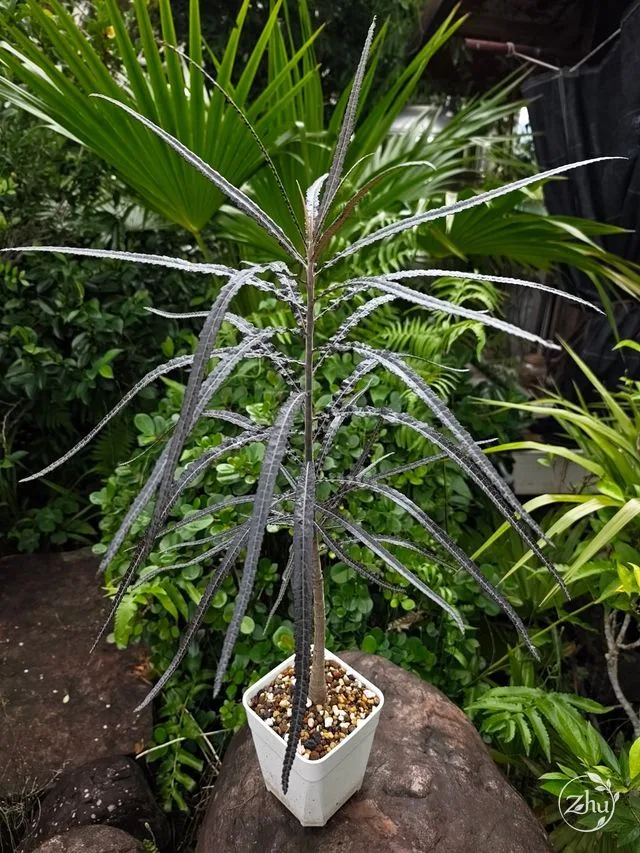
Compiled reference
Background
This plant belongs to the genus Boswellia in the family Burseraceae. Its scientific name is Boswellia elongata.
It is a tree native only to the island of Socotra, Yemen, where it grows primarily in the seasonally dry tropical biome. Wild populations occur in forest and shrubland at elevations of about 85 to 838 metres.
The IUCN Red List assessed it as Endangered in 2022 (published in 2025). There are about 5,000 mature individuals, and the population is severely fragmented and still declining. The threats listed include housing development, livestock grazing, roads, plant gathering, and drought, storms and flooding.
It is not currently listed in the CITES Appendices.
Sources
- Royal Botanic Gardens, Kew — Plants of the World Online (POWO): Boswellia elongata Balf.f.
- IUCN — The IUCN Red List of Threatened Species: Maděra, P. & Van Damme, K. 2025. Boswellia elongata. e.T30415A124661901
- UNEP-WCMC/CITES 秘書處 — Species+: Boswellia elongata Balf.f. — Legal
- 臺灣物種名錄 TaiCOL: Burseraceae 橄欖科
- 中國科學院植物研究所 — iPlant 植物智: 乳香树属 Boswellia
My own observations
Cultivation
My plant
This plant is a seedling I have grown from seed. I sowed it in early summer 2025, a little over a year ago, and there were only about three seedlings in the batch. It is now in a 6-inch pot.
Light and growth rate
At first, I don't think the conditions were ones it particularly liked. It sat in a full-sun spot but under 30% shade cloth, and the light was probably a bit on the low side, so it kept growing slowly. Even in the growing season, its growth was only so-so.
It was originally in a 4-inch pot with coarse, gritty potting media. This year, with about half the growing season still left, I decided to move it up to a 6-inch pot, again with coarse potting media. After letting it settle in for about two weeks, I moved it outdoors into the open. Clearly, it then grew very fast.
In my own growing experience, it is a frankincense species that really loves warmth and high light. Once temperatures rose, the growth was very noticeable.
Leaves
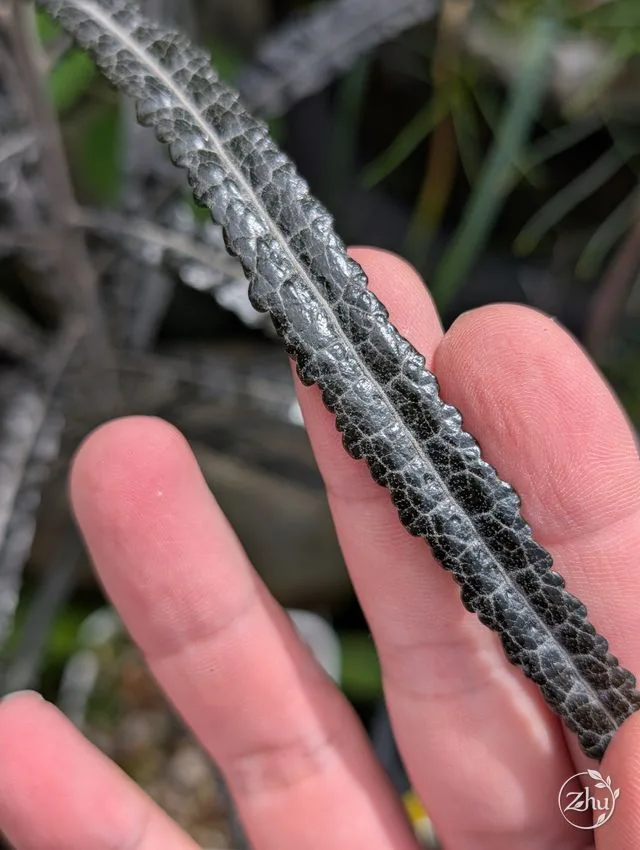
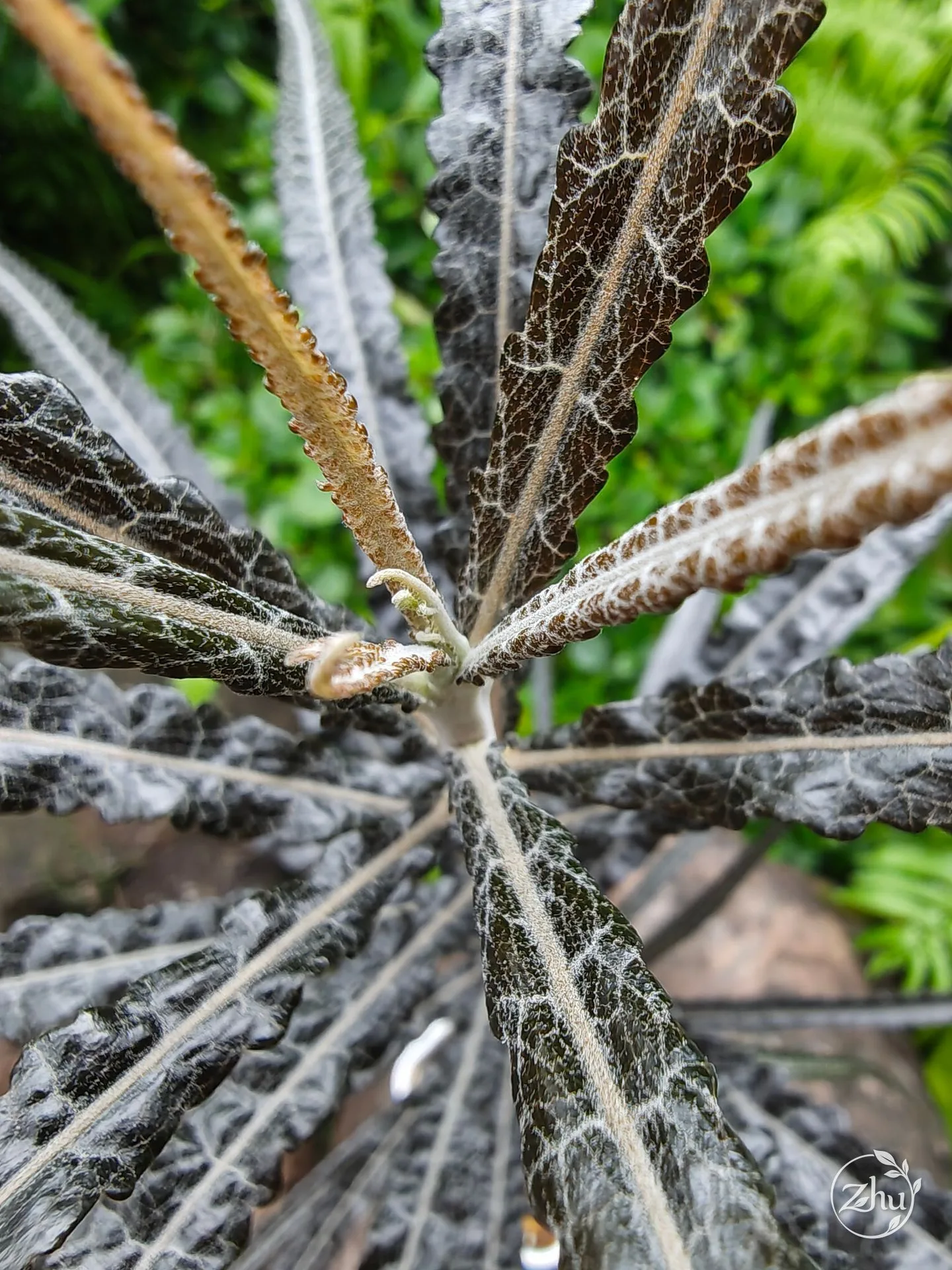
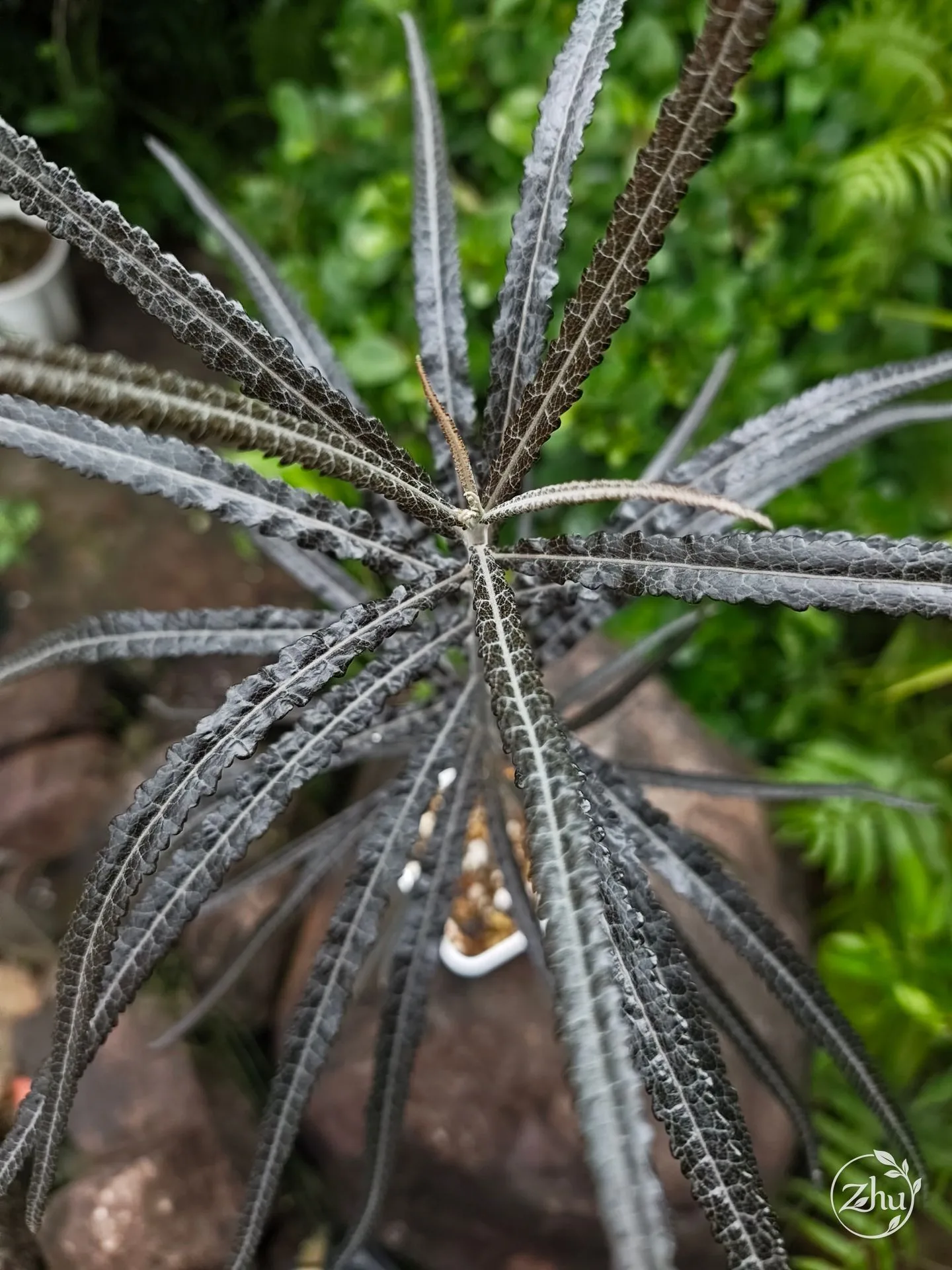
Its appearance is very distinctive. Grown outdoors in the open, the leaves are blackish, long and lance-shaped, with white markings. Perhaps because of the strong light, they seem to have a noticeable waxy layer that may reflect strong light and protect the leaves from the risk of sunburn when the light is too intense, which is why the leaves in the photos look so shiny.
New leaves are a bronze colour. Altogether, it is quite easy to recognise.
Trunk
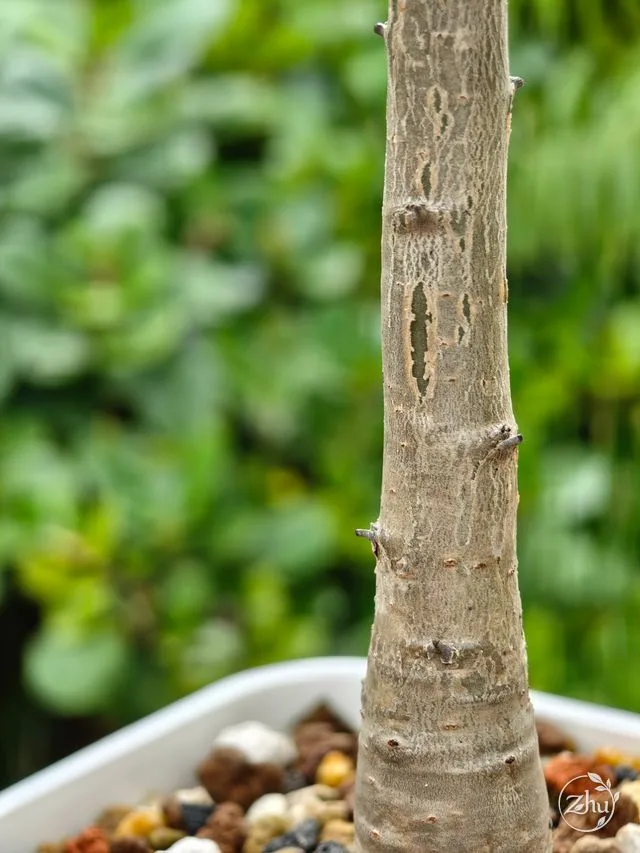
Boswellia elongata seems clearly to be a tree-type plant. Among these few seedlings, I have seen almost no natural branching. The stem is the same: a single straight trunk that just keeps growing upward.
As it grows quickly, you can also see the bark on the surface of the stem split because the stem is growing wider, leaving vertical cracks.
Photographs