 Zhu's Plant Journal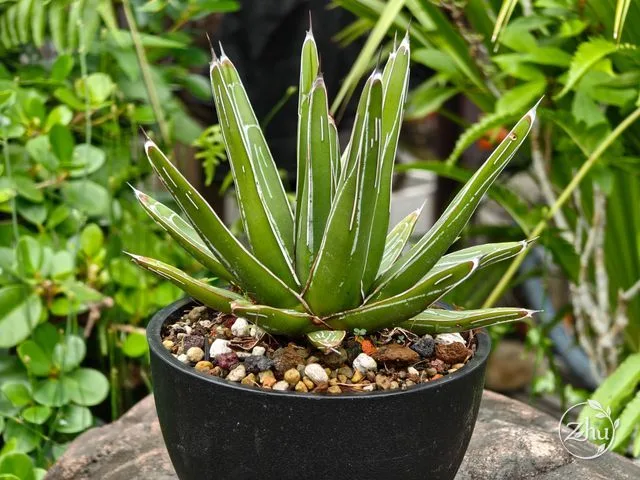
Compiled reference
Background
This plant belongs to the genus Agave in the family Asparagaceae. Its scientific name is Agave victoriae-reginae, published by T. Moore in 1875.
It is a succulent perennial native to north-eastern Mexico, where wild populations occur in the states of Nuevo León, Durango and Coahuila. It grows in shrubland and on rocky ground such as inland cliffs and mountain peaks, at about 564 to 1,684 metres, primarily in the desert or dry shrubland biome.
The IUCN Red List assessed it as Least Concern in 2018, with a stable population trend.
It is listed in CITES Appendix II, which means international trade is regulated, not banned. Under the current annotation to the listing, seeds are not covered by the Convention.
Sources
- Royal Botanic Gardens, Kew — Plants of the World Online (POWO): Agave victoriae-reginae T.Moore
- 臺灣物種名錄 TaiCOL: Agave 龍舌蘭屬
- IUCN — The IUCN Red List of Threatened Species: González-Elizondo, M. et al. 2018. Agave victoriae-reginae. e.T115698952A116354643
- UNEP-WCMC/CITES 秘書處 — Species+: Agave victoriae-reginae T. Moore — Legal
- Royal Botanic Gardens, Kew — Plants of the World Online (POWO): Agave titanota Gentry
My own observations
Cultivation
Starting from seed
A few years ago there was a stretch when plants were really popular, including all kinds of aroids, staghorn ferns, all sorts of caudex plants, and agaves. Just for fun, I bought some seed too and sowed it to see what would happen.
When I first got the seed, it reminded me a little of green onion seed: black and flake-like. I simply sowed it in ordinary potting soil mixed with a bit of perlite, with no special treatment, and the germination rate was quite high. I kept a few plants to enjoy, and now have about five or six.
Why I like this agave
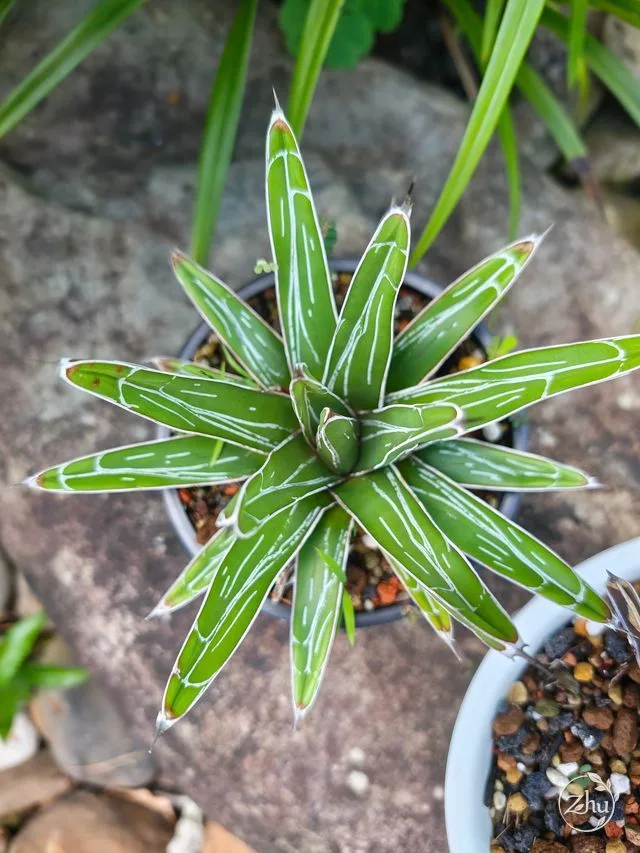
Among agaves, the ones I personally like best are not Agave titanota (嚴龍), which can be grown into a handsome, compact, tightly clasping form, but types like this one: rounder in shape, with leaves arranged in a regular pattern and white markings on the leaves.
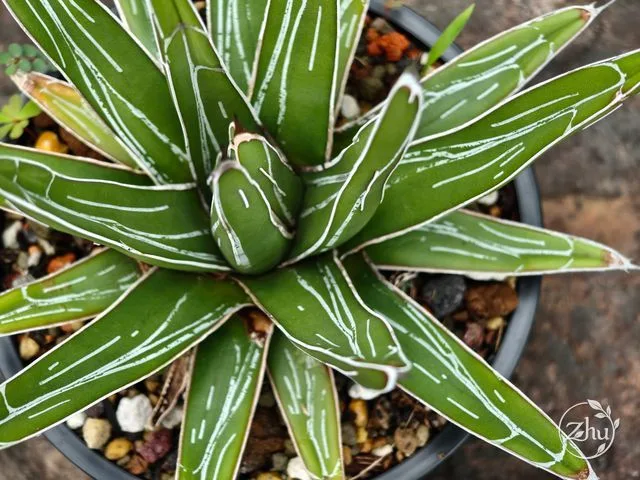
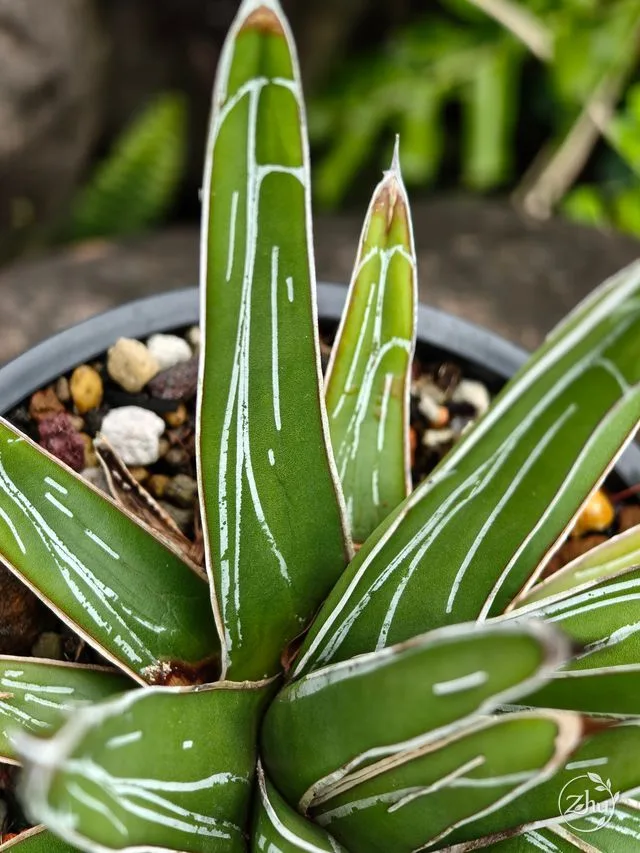
Broadly, there are individuals with yellow margins, white edges, and all kinds of markings. When they reach their ultimate form, the leaves stacked layer upon layer are truly beautiful.
Compared with other members of the agave family, I find it relatively easy to recognise (ha). Sometimes I genuinely struggle to tell apart the spine arrangements of different Agave titanota plants, but friends who love them can tell them apart easily, as if reciting a list of treasures.
Growing it
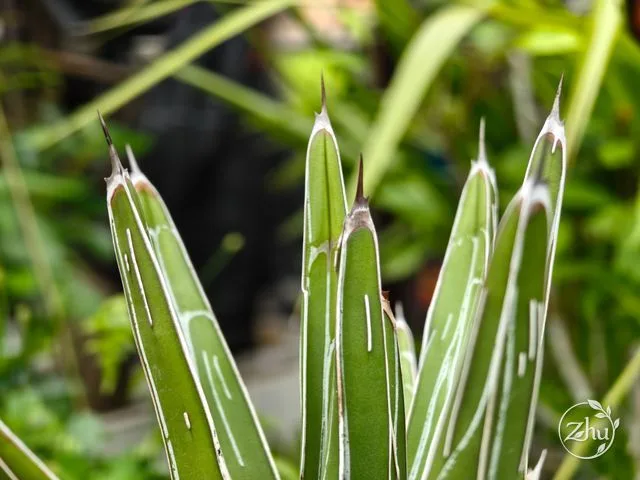
It really doesn't take much effort to grow. The one stage that needs a little care is when seedlings have their cotyledons and one or two true leaves: just don't give them light that is too strong. The rest of the time I mostly keep them in high light, in coarse, gritty potting media, and water when the soil has dried.
Over time you slowly see the leaves stack up layer by layer into a form with a sense of regularity. The plants in the photos are about three to four years old. They haven't reached their full form yet, but they are already starting to look layered.
These plants mainly grow outdoors in full, direct sun. In midsummer I water them every two to three days, and they are genuinely low-maintenance.
But there is one thing about growing agaves that is genuinely inconvenient, and this one is especially annoying: the spines at the tips of the leaves. When you reach for other plants or tidy up, it is very easy to get jabbed in the hand, and in worse cases it even draws blood, which doesn't put you in a good mood. That is why you often see people fix white polystyrene foam balls onto the leaf tips of some large agave species, so the spines don't hurt anyone walking past.